Showing posts with label Nobel Peace Prize. Show all posts

Friday, October 07, 2011

Congratulations to the Nobel Peace Prize Winners for 2011

Congratulations to the 2011 Nobel Peace Prize Winners: Liberian President Ellen Johnson Sirleaf, peace activist Leymah Gbowee, from the same African country, and democracy activist Tawakkul Karman of Yemen


A combination of three recent photos shows (from L) Yemen's Arab Spring activist Tawakkul Karman, Liberian President Ellen Johnson Sirleaf and Liberian "peace warrior" Leymah Gbowee who won the 2011 Nobel Peace Prize the jury announced on October 7, 2011. The three prizewinners share the 2011 award "for their non-violent struggle for the safety of women and for women's rights to full participation in peace-building work," Norwegian Nobel Committee president Thorbjoern Jagland said in his announcement.
----MANDEL NGAN/AFP/Getty Images


Nobel Peace Prize Awarded to Three Activist Women
By ALAN COWELL
Published: October 7, 2011


The Nobel Peace Prize for 2011 was awarded on Friday to three campaigning women from Africa and the Arab world in acknowledgment of their nonviolent role in promoting peace, democracy and gender equality. The winners were Liberian President Ellen Johnson Sirleaf — Africa’s first elected female president — her compatriot, peace activist Leymah Gbowee and Tawakul Karman of Yemen, a pro-democracy campaigner.


They were the first women to win the prize since Kenya’s Wangari Maathai, who died last month, was named as the laureate in 2004. Most of the recipients in the award’s 110-year history have been men, and the award seemed designed to give impetus to the cause for women’s rights around the world.

“We cannot achieve democracy and lasting peace in the world unless women obtain the same opportunities as men to influence developments at all levels of society,” said the citation read to reporters by Thorbjorn Jagland, a former Norwegian prime minister who heads the Oslo-based Nobel committee that chooses the winner of the $1.5 million prize.

In a subsequent interview, he described the prize as “a very important signal to women all over the world.”

As the prize was announced, Bushuben Keita, a spokesman for Mrs. Johnson Sirleaf’s Unity Party, declared: “We are dancing. This is the thing that we have been saying, progress has been made in Liberia. We’ve come through 14 years of war and we have come to sustained peace. We’ve already started dancing.

“This is proof that she has been doing well, there’s no cheating in this, this comes from other people. She’s doing very, very well. Her progress has been confirmed by the international community.”

In Yemen, Ms. Karman, 32, sat in a tent where has been living since February as part of the sit-in organized to underscore demands for change. “This is the victory of our peaceful revolution,” she said. “I am so happy and I give this award to all of the youth and all of the women across the Arab world, in Egypt, in Tunisia.”

“We cannot build our country or any country in the world without peace,” she said.


....................................


NYSL: Leymah Gbowee on "Mighty Be Our Powers"


Ellen Johnson Sirleaf at Harvard Commencement


توكل كرمان - Tawakkul Karman - Nobel Peace Prize winner

Thursday, December 10, 2009

The President Receives the Nobel Peace Prize

NOBEL-OBAMA/
Nobel Peace Prize laureate U.S. President Barack Obama poses with his diploma and medal after receiving the prize at the award ceremony in Oslo City Hall December 10, 2009. The Nobel committee is awarding the peace prize to Obama for his extraordinary efforts to strengthen international diplomacy and cooperation between peoples and cited his push for nuclear disarmament.
-----REUTERS/Kevin Lamarque


Norway Nobel Peace Obama
President and Nobel Peace Prize laureate Barack Obama poses with his medal and diploma at the Nobel Peace Prize ceremony at City Hall in Oslo, Thursday, Dec. 10, 2009.
----AP Photo/Odd Andersen


The President's Remarks in Oslo:


The White House

Office of the Press Secretary
For Immediate Release
December 10, 2009
Remarks by the President at the Acceptance of the Nobel Peace Prize

Oslo City Hall
Oslo, Norway

1:44 P.M. CET


THE PRESIDENT: Your Majesties, Your Royal Highnesses, distinguished members of the Norwegian Nobel Committee, citizens of America, and citizens of the world:

I receive this honor with deep gratitude and great humility. It is an award that speaks to our highest aspirations -- that for all the cruelty and hardship of our world, we are not mere prisoners of fate. Our actions matter, and can bend history in the direction of justice.

And yet I would be remiss if I did not acknowledge the considerable controversy that your generous decision has generated. (Laughter.) In part, this is because I am at the beginning, and not the end, of my labors on the world stage. Compared to some of the giants of history who've received this prize -- Schweitzer and King; Marshall and Mandela -- my accomplishments are slight. And then there are the men and women around the world who have been jailed and beaten in the pursuit of justice; those who toil in humanitarian organizations to relieve suffering; the unrecognized millions whose quiet acts of courage and compassion inspire even the most hardened cynics. I cannot argue with those who find these men and women -- some known, some obscure to all but those they help -- to be far more deserving of this honor than I.

But perhaps the most profound issue surrounding my receipt of this prize is the fact that I am the Commander-in-Chief of the military of a nation in the midst of two wars. One of these wars is winding down. The other is a conflict that America did not seek; one in which we are joined by 42 other countries -- including Norway -- in an effort to defend ourselves and all nations from further attacks.

Still, we are at war, and I'm responsible for the deployment of thousands of young Americans to battle in a distant land. Some will kill, and some will be killed. And so I come here with an acute sense of the costs of armed conflict -- filled with difficult questions about the relationship between war and peace, and our effort to replace one with the other.

Now these questions are not new. War, in one form or another, appeared with the first man. At the dawn of history, its morality was not questioned; it was simply a fact, like drought or disease -- the manner in which tribes and then civilizations sought power and settled their differences.

And over time, as codes of law sought to control violence within groups, so did philosophers and clerics and statesmen seek to regulate the destructive power of war. The concept of a "just war" emerged, suggesting that war is justified only when certain conditions were met: if it is waged as a last resort or in self-defense; if the force used is proportional; and if, whenever possible, civilians are spared from violence.

Of course, we know that for most of history, this concept of "just war" was rarely observed. The capacity of human beings to think up new ways to kill one another proved inexhaustible, as did our capacity to exempt from mercy those who look different or pray to a different God. Wars between armies gave way to wars between nations -- total wars in which the distinction between combatant and civilian became blurred. In the span of 30 years, such carnage would twice engulf this continent. And while it's hard to conceive of a cause more just than the defeat of the Third Reich and the Axis powers, World War II was a conflict in which the total number of civilians who died exceeded the number of soldiers who perished.

In the wake of such destruction, and with the advent of the nuclear age, it became clear to victor and vanquished alike that the world needed institutions to prevent another world war. And so, a quarter century after the United States Senate rejected the League of Nations -- an idea for which Woodrow Wilson received this prize -- America led the world in constructing an architecture to keep the peace: a Marshall Plan and a United Nations, mechanisms to govern the waging of war, treaties to protect human rights, prevent genocide, restrict the most dangerous weapons.

In many ways, these efforts succeeded. Yes, terrible wars have been fought, and atrocities committed. But there has been no Third World War. The Cold War ended with jubilant crowds dismantling a wall. Commerce has stitched much of the world together. Billions have been lifted from poverty. The ideals of liberty and self-determination, equality and the rule of law have haltingly advanced. We are the heirs of the fortitude and foresight of generations past, and it is a legacy for which my own country is rightfully proud.

And yet, a decade into a new century, this old architecture is buckling under the weight of new threats. The world may no longer shudder at the prospect of war between two nuclear superpowers, but proliferation may increase the risk of catastrophe. Terrorism has long been a tactic, but modern technology allows a few small men with outsized rage to murder innocents on a horrific scale.

Moreover, wars between nations have increasingly given way to wars within nations. The resurgence of ethnic or sectarian conflicts; the growth of secessionist movements, insurgencies, and failed states -- all these things have increasingly trapped civilians in unending chaos. In today's wars, many more civilians are killed than soldiers; the seeds of future conflict are sown, economies are wrecked, civil societies torn asunder, refugees amassed, children scarred.

I do not bring with me today a definitive solution to the problems of war. What I do know is that meeting these challenges will require the same vision, hard work, and persistence of those men and women who acted so boldly decades ago. And it will require us to think in new ways about the notions of just war and the imperatives of a just peace.

We must begin by acknowledging the hard truth: We will not eradicate violent conflict in our lifetimes. There will be times when nations -- acting individually or in concert -- will find the use of force not only necessary but morally justified.

I make this statement mindful of what Martin Luther King Jr. said in this same ceremony years ago: "Violence never brings permanent peace. It solves no social problem: it merely creates new and more complicated ones." As someone who stands here as a direct consequence of Dr. King's life work, I am living testimony to the moral force of non-violence. I know there's nothing weak -- nothing passive -- nothing naïve -- in the creed and lives of Gandhi and King.

But as a head of state sworn to protect and defend my nation, I cannot be guided by their examples alone. I face the world as it is, and cannot stand idle in the face of threats to the American people. For make no mistake: Evil does exist in the world. A non-violent movement could not have halted Hitler's armies. Negotiations cannot convince al Qaeda's leaders to lay down their arms. To say that force may sometimes be necessary is not a call to cynicism -- it is a recognition of history; the imperfections of man and the limits of reason.

I raise this point, I begin with this point because in many countries there is a deep ambivalence about military action today, no matter what the cause. And at times, this is joined by a reflexive suspicion of America, the world's sole military superpower.

But the world must remember that it was not simply international institutions -- not just treaties and declarations -- that brought stability to a post-World War II world. Whatever mistakes we have made, the plain fact is this: The United States of America has helped underwrite global security for more than six decades with the blood of our citizens and the strength of our arms. The service and sacrifice of our men and women in uniform has promoted peace and prosperity from Germany to Korea, and enabled democracy to take hold in places like the Balkans. We have borne this burden not because we seek to impose our will. We have done so out of enlightened self-interest -- because we seek a better future for our children and grandchildren, and we believe that their lives will be better if others' children and grandchildren can live in freedom and prosperity.

So yes, the instruments of war do have a role to play in preserving the peace. And yet this truth must coexist with another -- that no matter how justified, war promises human tragedy. The soldier's courage and sacrifice is full of glory, expressing devotion to country, to cause, to comrades in arms. But war itself is never glorious, and we must never trumpet it as such.

So part of our challenge is reconciling these two seemingly inreconcilable truths -- that war is sometimes necessary, and war at some level is an expression of human folly. Concretely, we must direct our effort to the task that President Kennedy called for long ago. "Let us focus," he said, "on a more practical, more attainable peace, based not on a sudden revolution in human nature but on a gradual evolution in human institutions." A gradual evolution of human institutions.

What might this evolution look like? What might these practical steps be?

To begin with, I believe that all nations -- strong and weak alike -- must adhere to standards that govern the use of force. I -- like any head of state -- reserve the right to act unilaterally if necessary to defend my nation. Nevertheless, I am convinced that adhering to standards, international standards, strengthens those who do, and isolates and weakens those who don't.

The world rallied around America after the 9/11 attacks, and continues to support our efforts in Afghanistan, because of the horror of those senseless attacks and the recognized principle of self-defense. Likewise, the world recognized the need to confront Saddam Hussein when he invaded Kuwait -- a consensus that sent a clear message to all about the cost of aggression.

Furthermore, America -- in fact, no nation -- can insist that others follow the rules of the road if we refuse to follow them ourselves. For when we don't, our actions appear arbitrary and undercut the legitimacy of future interventions, no matter how justified.

And this becomes particularly important when the purpose of military action extends beyond self-defense or the defense of one nation against an aggressor. More and more, we all confront difficult questions about how to prevent the slaughter of civilians by their own government, or to stop a civil war whose violence and suffering can engulf an entire region.

I believe that force can be justified on humanitarian grounds, as it was in the Balkans, or in other places that have been scarred by war. Inaction tears at our conscience and can lead to more costly intervention later. That's why all responsible nations must embrace the role that militaries with a clear mandate can play to keep the peace.

America's commitment to global security will never waver. But in a world in which threats are more diffuse, and missions more complex, America cannot act alone. America alone cannot secure the peace. This is true in Afghanistan. This is true in failed states like Somalia, where terrorism and piracy is joined by famine and human suffering. And sadly, it will continue to be true in unstable regions for years to come.

The leaders and soldiers of NATO countries, and other friends and allies, demonstrate this truth through the capacity and courage they've shown in Afghanistan. But in many countries, there is a disconnect between the efforts of those who serve and the ambivalence of the broader public. I understand why war is not popular, but I also know this: The belief that peace is desirable is rarely enough to achieve it. Peace requires responsibility. Peace entails sacrifice. That's why NATO continues to be indispensable. That's why we must strengthen U.N. and regional peacekeeping, and not leave the task to a few countries. That's why we honor those who return home from peacekeeping and training abroad to Oslo and Rome; to Ottawa and Sydney; to Dhaka and Kigali -- we honor them not as makers of war, but of wagers -- but as wagers of peace.

Let me make one final point about the use of force. Even as we make difficult decisions about going to war, we must also think clearly about how we fight it. The Nobel Committee recognized this truth in awarding its first prize for peace to Henry Dunant -- the founder of the Red Cross, and a driving force behind the Geneva Conventions.

Where force is necessary, we have a moral and strategic interest in binding ourselves to certain rules of conduct. And even as we confront a vicious adversary that abides by no rules, I believe the United States of America must remain a standard bearer in the conduct of war. That is what makes us different from those whom we fight. That is a source of our strength. That is why I prohibited torture. That is why I ordered the prison at Guantanamo Bay closed. And that is why I have reaffirmed America's commitment to abide by the Geneva Conventions. We lose ourselves when we compromise the very ideals that we fight to defend. (Applause.) And we honor -- we honor those ideals by upholding them not when it's easy, but when it is hard.

I have spoken at some length to the question that must weigh on our minds and our hearts as we choose to wage war. But let me now turn to our effort to avoid such tragic choices, and speak of three ways that we can build a just and lasting peace.

First, in dealing with those nations that break rules and laws, I believe that we must develop alternatives to violence that are tough enough to actually change behavior -- for if we want a lasting peace, then the words of the international community must mean something. Those regimes that break the rules must be held accountable. Sanctions must exact a real price. Intransigence must be met with increased pressure -- and such pressure exists only when the world stands together as one.

One urgent example is the effort to prevent the spread of nuclear weapons, and to seek a world without them. In the middle of the last century, nations agreed to be bound by a treaty whose bargain is clear: All will have access to peaceful nuclear power; those without nuclear weapons will forsake them; and those with nuclear weapons will work towards disarmament. I am committed to upholding this treaty. It is a centerpiece of my foreign policy. And I'm working with President Medvedev to reduce America and Russia's nuclear stockpiles.

But it is also incumbent upon all of us to insist that nations like Iran and North Korea do not game the system. Those who claim to respect international law cannot avert their eyes when those laws are flouted. Those who care for their own security cannot ignore the danger of an arms race in the Middle East or East Asia. Those who seek peace cannot stand idly by as nations arm themselves for nuclear war.

The same principle applies to those who violate international laws by brutalizing their own people. When there is genocide in Darfur, systematic rape in Congo, repression in Burma -- there must be consequences. Yes, there will be engagement; yes, there will be diplomacy -- but there must be consequences when those things fail. And the closer we stand together, the less likely we will be faced with the choice between armed intervention and complicity in oppression.

This brings me to a second point -- the nature of the peace that we seek. For peace is not merely the absence of visible conflict. Only a just peace based on the inherent rights and dignity of every individual can truly be lasting.

It was this insight that drove drafters of the Universal Declaration of Human Rights after the Second World War. In the wake of devastation, they recognized that if human rights are not protected, peace is a hollow promise.

And yet too often, these words are ignored. For some countries, the failure to uphold human rights is excused by the false suggestion that these are somehow Western principles, foreign to local cultures or stages of a nation's development. And within America, there has long been a tension between those who describe themselves as realists or idealists -- a tension that suggests a stark choice between the narrow pursuit of interests or an endless campaign to impose our values around the world.

I reject these choices. I believe that peace is unstable where citizens are denied the right to speak freely or worship as they please; choose their own leaders or assemble without fear. Pent-up grievances fester, and the suppression of tribal and religious identity can lead to violence. We also know that the opposite is true. Only when Europe became free did it finally find peace. America has never fought a war against a democracy, and our closest friends are governments that protect the rights of their citizens. No matter how callously defined, neither America's interests -- nor the world's -- are served by the denial of human aspirations.

So even as we respect the unique culture and traditions of different countries, America will always be a voice for those aspirations that are universal. We will bear witness to the quiet dignity of reformers like Aung Sang Suu Kyi; to the bravery of Zimbabweans who cast their ballots in the face of beatings; to the hundreds of thousands who have marched silently through the streets of Iran. It is telling that the leaders of these governments fear the aspirations of their own people more than the power of any other nation. And it is the responsibility of all free people and free nations to make clear that these movements -- these movements of hope and history -- they have us on their side.

Let me also say this: The promotion of human rights cannot be about exhortation alone. At times, it must be coupled with painstaking diplomacy. I know that engagement with repressive regimes lacks the satisfying purity of indignation. But I also know that sanctions without outreach -- condemnation without discussion -- can carry forward only a crippling status quo. No repressive regime can move down a new path unless it has the choice of an open door.

In light of the Cultural Revolution's horrors, Nixon's meeting with Mao appeared inexcusable -- and yet it surely helped set China on a path where millions of its citizens have been lifted from poverty and connected to open societies. Pope John Paul's engagement with Poland created space not just for the Catholic Church, but for labor leaders like Lech Walesa. Ronald Reagan's efforts on arms control and embrace of perestroika not only improved relations with the Soviet Union, but empowered dissidents throughout Eastern Europe. There's no simple formula here. But we must try as best we can to balance isolation and engagement, pressure and incentives, so that human rights and dignity are advanced over time.

Third, a just peace includes not only civil and political rights -- it must encompass economic security and opportunity. For true peace is not just freedom from fear, but freedom from want.

It is undoubtedly true that development rarely takes root without security; it is also true that security does not exist where human beings do not have access to enough food, or clean water, or the medicine and shelter they need to survive. It does not exist where children can't aspire to a decent education or a job that supports a family. The absence of hope can rot a society from within.

And that's why helping farmers feed their own people -- or nations educate their children and care for the sick -- is not mere charity. It's also why the world must come together to confront climate change. There is little scientific dispute that if we do nothing, we will face more drought, more famine, more mass displacement -- all of which will fuel more conflict for decades. For this reason, it is not merely scientists and environmental activists who call for swift and forceful action -- it's military leaders in my own country and others who understand our common security hangs in the balance.

Agreements among nations. Strong institutions. Support for human rights. Investments in development. All these are vital ingredients in bringing about the evolution that President Kennedy spoke about. And yet, I do not believe that we will have the will, the determination, the staying power, to complete this work without something more -- and that's the continued expansion of our moral imagination; an insistence that there's something irreducible that we all share.

As the world grows smaller, you might think it would be easier for human beings to recognize how similar we are; to understand that we're all basically seeking the same things; that we all hope for the chance to live out our lives with some measure of happiness and fulfillment for ourselves and our families.

And yet somehow, given the dizzying pace of globalization, the cultural leveling of modernity, it perhaps comes as no surprise that people fear the loss of what they cherish in their particular identities -- their race, their tribe, and perhaps most powerfully their religion. In some places, this fear has led to conflict. At times, it even feels like we're moving backwards. We see it in the Middle East, as the conflict between Arabs and Jews seems to harden. We see it in nations that are torn asunder by tribal lines.

And most dangerously, we see it in the way that religion is used to justify the murder of innocents by those who have distorted and defiled the great religion of Islam, and who attacked my country from Afghanistan. These extremists are not the first to kill in the name of God; the cruelties of the Crusades are amply recorded. But they remind us that no Holy War can ever be a just war. For if you truly believe that you are carrying out divine will, then there is no need for restraint -- no need to spare the pregnant mother, or the medic, or the Red Cross worker, or even a person of one's own faith. Such a warped view of religion is not just incompatible with the concept of peace, but I believe it's incompatible with the very purpose of faith -- for the one rule that lies at the heart of every major religion is that we do unto others as we would have them do unto us.

Adhering to this law of love has always been the core struggle of human nature. For we are fallible. We make mistakes, and fall victim to the temptations of pride, and power, and sometimes evil. Even those of us with the best of intentions will at times fail to right the wrongs before us.

But we do not have to think that human nature is perfect for us to still believe that the human condition can be perfected. We do not have to live in an idealized world to still reach for those ideals that will make it a better place. The non-violence practiced by men like Gandhi and King may not have been practical or possible in every circumstance, but the love that they preached -- their fundamental faith in human progress -- that must always be the North Star that guides us on our journey.

For if we lose that faith -- if we dismiss it as silly or naïve; if we divorce it from the decisions that we make on issues of war and peace -- then we lose what's best about humanity. We lose our sense of possibility. We lose our moral compass.

Like generations have before us, we must reject that future. As Dr. King said at this occasion so many years ago, "I refuse to accept despair as the final response to the ambiguities of history. I refuse to accept the idea that the 'isness' of man's present condition makes him morally incapable of reaching up for the eternal 'oughtness' that forever confronts him."

Let us reach for the world that ought to be -- that spark of the divine that still stirs within each of our souls. (Applause.)

Somewhere today, in the here and now, in the world as it is, a soldier sees he's outgunned, but stands firm to keep the peace. Somewhere today, in this world, a young protestor awaits the brutality of her government, but has the courage to march on. Somewhere today, a mother facing punishing poverty still takes the time to teach her child, scrapes together what few coins she has to send that child to school -- because she believes that a cruel world still has a place for that child's dreams.

Let us live by their example. We can acknowledge that oppression will always be with us, and still strive for justice. We can admit the intractability of depravation, and still strive for dignity. Clear-eyed, we can understand that there will be war, and still strive for peace. We can do that -- for that is the story of human progress; that's the hope of all the world; and at this moment of challenge, that must be our work here on Earth.

Thank you very much.


also:
Will & Jada Pinkett Smith Slated to Co-Host Nobel Peace Prize Concert


Hollywood power-couple Will and Jada Pinkett Smith will lend themselves to the Nobel Peace Prize Concert according to the Associated Press.

The husband and wife will serve as co-hosts of the annual event on December 11 in Oslo, Norway. According to the AP, major acts such as Wyclef Jean, Toby Keith, and Donna Summer will perform as well.

The Smith's said in a statement, "The opportunity to recognize the laureate's contributions to the world peace movement will be an awe-inspiring experience. We are both humbled and honored to take part in the Nobel Peace Prize Concert this year."

Friday, October 09, 2009

Obama’s Comments on His Nobel Award

Obama and the Nobel Peace Prize - Deserving or Not?


This is also cross posted at The Daily Kos, where you aren't allowed to criticize Obama in any way. As I expected, Daily Kos readers wasted no time attacking me. lol Anyone who doesn't bow at Obama's feet gets trashed at DKos. It's automatic. I love visiting the echo chamber once in a while to shake things up. When they attack it lets me know i'm on the right track.

******************************************


He may not have deserved the prize on specific accomplishments, but I am happy for him anyway.

I have a mixed response to this. To those who don't understand International affairs/politics, or who have a very limited understanding... it sounds great. But...

On the merits, to put it plainly and truthfully.... he doesn't really deserve the prize. The fact is, he hasn't done anything yet to warrant the award.

1. The U.S. is still entangled in two wars, and could enter another conflict with Iran (a much larger conflict) within the next 18 months to two years. In fact, the media and the Obama Administration are already in the process of selling a possible conflict with Iran to the American public.

2. The Obama foreign policy team has no doves or modern foreign policy thinkers in any position of authority who can influence policy. His National Security Council and diplomatic teams are made up of mostly Centrist Democrats (Traditional Truman Doctrine/Domino theory thinkers....old thinkers), and moderate Republicans.... They lean much more towards pro-war thinking, than pro-peace. If he were a "pro-Peace" or dove President, he would have reached out to the many scholars who have a more progressive, less confrontational foreign policy orientation. He didn't do that when he came into office. That spoke volumes. (Hillary Clinton as your top diplomat??? Watch the youtube video here).

3. The U.S. has not made any significant changes in terms of its NATO policy. The U.S. still has an expansionist view when it comes to the future of NATO. Obama recently decided to scrap the missile system in Eastern Europe...but this was only a step in the right direction and may have only been temporary. He left the door open for future missile systems that would be more robust and would include fixed sites. The ship based idea (which I was writing about 2 years ago) was a good decision.

4. The Obama Administration is still very active when it comes to meddling in the former Soviet Union. This will be a future source of contention between the U.S. and Russia. In fact, there is a Cold War in full throttle in Georgia right now... just as intense (possibly much more intense) than East and West Germany in the 1970's and 80's.

5. This Administration continues to take a biased position when it comes to Israel...even failing to recognize the UN report on abuses by the Israeli's. It continues to provide protection for Israel in the UN, even when criticism of Israel is warranted.
The U.S. under Obama is still not viewed as a more even handed intermediary in the Middle East (or anywhere else for that matter).

6. The Obama Administration, particularly the foreign policy team, is still clinging to old Truman Doctrine ideas about the World and how the World should look.... outdated ideas of global hegemony, where the U.S. uses its military might to get its way. Truman Doctrine/Domino Theory thinkers dominate Obama's foreign policy team. There has not been a clean break from the U.S. foreign policy of the last 50+ years. There have been a few changes....but these changes have been done under the same foreign policy framework and orientation that the U.S. has had for the past 6 decades. There are always a few changes when there is a new political Party in the White House. But there has been no clean break from the past...or fundamental change in how the U.S. sees itself in the World, or how we will approach international affairs in the future. War/conflict/tension/meddling/the use of the military to project U.S. power...are all still part of the main course.

Despite the rhetoric to the contrary...there are few differences between Democratic and Republican Administrations when it comes to foreign policy. Most of the perceived differences are cosmetic.

With that said....

The Nobel Committee may have been up to something here. This award may have been a way for Europe to influence Obama and his foreign policy in a positive way. This prize will provide a sort of shadow conscience for any major decision that he will make from here on out. He may be more reluctant to do anything that might challenge his new found position as a Nobel Peace Laureate. It may provide some sort of moderating effect on his policy-making. And to me... that is a good thing. It's great that the Nobel Committee recognized the Obama Administrations stated willingness to talk to enemies (although Obama's Neo-con Light Foreign Policy team agreed to...and then later refused one-on-one talks with the North Koreans. We'll see how that goes. But it's clear that Darth Vader - Hillary Clinton- doesn't seem to understand that the six party talks strategy is not very effective and is not the best approach for N. Korea for a variety of reasons). This award may encourage other feuding nations to go the extra mile in terms of negotiations.

It will also likely give other Nobel Peace prize winners more open access to the President....again... a moderating effect... constantly reminding him of his new position...and the responsibilities that they believe it brings.

So although I question whether others more deserving should have been recognized.... I am also o.k. with the fact that he got it. This was definitely a leap of faith by the Nobel Committee (because they really don't know what the results will be from the Obama Administrations foreign policy in the months and years to come).

Now hopefully he will go out and do something good with it.... as President. Although I don't believe this will change the Traditional Centrist Democrat orientation of his foreign policy team, unfortunately. He has surrounded himself with pro-war advisers...and that will continue to be a problem for the U.S.


UPDATE: 10/10/09

Obama himself made the acknowledgment. Also, just about every political observer, pundit, and international political expert agrees with most of the observations that I made. My thoughts were basically vindicated within 24 hours. Those who blindly slammed me can rant and rave until their hearts content, but facts are facts.

With Obama's acknowledgment, I have to say, i'm all for the idea of the award being given. It will be a good thing, IMO.

Also... this wasn't a slam of Obama.... If I intended to do that... I could have easily kept my list going with:

7. Gitmo still being open

8. Military Tribunals chosen over Federal Courts

9. The continuation of Extraordinary Renditions (yes folks... people are still being kidnapped and sent to interrogations overseas).

10. Lackluster approach to the Darfur crisis

Etc etc (Obama has continued a number of controversial policies that were pushed by the Bush Administration)

****************************************************************
****************************************************************

Related Links

From the Moderate Voice - Not So Noble Nobel Peace Prize

Another blogger asks the same question that the Angry Independent is asking himself - were there no other candidates more deserving?

Too Soon? I agree with Lech Walesa.

President Barack Obama Awarded 2009 Nobel Peace Prize


From CNN:
Obama awarded 2009 Nobel Peace Prize

(CNN) -- President Barack Obama won the 2009 Nobel Peace Prize on Friday, a stunning decision that comes just eight months into his presidency.

The Norwegian Nobel Committee said it honored Obama for his "extraordinary efforts to strengthen international diplomacy and cooperation between peoples."

The president had not been mentioned as among front-runners for the prize, and the roomful of reporters gasped when Thorbjorn Jagland, chairman of the Nobel committee, uttered Obama's name.

The president, who was awakened to be told he had won, said he was humbled to be selected, according to an administration official.

The Nobel committee recognized Obama's efforts to solve complex global problems including working toward a world free of nuclear weapons.

"Only very rarely has a person to the same extent as Obama captured the world's attention and given its people hope for a better future," the committee said.

Jagland said the decision was "unanimous" and came with ease.

He rejected the notion that Obama had been recognized prematurely for his efforts and said the committee wanted to promote the president just it had Mikhail Gorbachev in 1990 in his efforts to open up the Soviet Union.

"His diplomacy is founded in the concept that those who are to lead the world must do so on the basis of values and attitudes that are shared by the majority of the world's population," it said.

Obama's recognition comes less than a year after he became the first African-American to win the White House. He is the fourth U.S. president to win the prestigious prize and the third sitting president to do so.


Rest of article at link above.

Monday, January 21, 2008

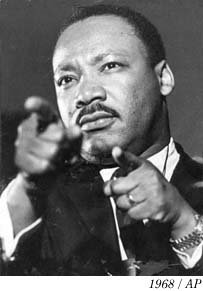
There Was More To Dr. King Than "I Have A Dream"

This is an update of my 2007 MLK Day Post. I Couldn't top my post from last year, so I just decided on the update.

image description


There was much more to Dr. King than I Have A Dream. Americans will be bombarded today (and in February) with loops of the famous I Have A Dream speech being played 10,000 times. But you won't see or hear the speech here. The U.S. uses that speech as a way to disarm Kings message. It has been ironic to watch the U.S. government "honor" King over the last few years, particularly while the U.S. has been at war, yet they avoid mentioning anything about his well known moral and political position on War....and the War in Vietnam in particular. Just take out the word Vietnam and replace it with Iraq, and it sounds like King is talking in the year 2007.

It's a shame that his Holiday is not truly celebrated in this country. Most people see it as just another day. Most White Americans barely recognize the day. It's a shame and very ironic that a man who spoke against segregation has a national Holiday that is segregated in terms of how people recognize it.

Below, I have included 5 great speeches from Dr King, some of them dealing with his feelings about war.

What Would MLK Say About The World Today?


What Would Dr. King Think About What Was Going On In The World Today?

He basically told us 4 decades ago.... we were just a little late arriving to the show.
If we would just listen to these Prophets when they are here sounding the alarm, maybe we could avoid more disasters. Many of the things that King spoke of 4 decades ago, we see today. It is a combination of things not changing, and King being way ahead of his time, foretelling issues and threats decades ago that we are now seeing develop today in our lifetimes.

Listen to the speech The Drum Major Instinct, given in February of 1968. This is one of my favorite speeches, and one that never gets old. It is so relevant for today. It's also one of Kings great messages. However, his greatest & most powerful speech, in my opinion, has to be a speech titled "A Knock At Midnight". Scary speech. Unfortunately I don’t have A Knock At Midnight in a digital format. But Drum Major Instinct is also one of his great messages….one of my top 3 favorites.

I Have a Dream is a great speech but it is not his greatest work. But America often uses I Have a Dream to try to sanitize King, and box him into being a Civil Rights/Racial Equality leader. The fact is, between 1965 & 1968, King was the leading anti-war voice and leading voice for economic equality in the country. I think that is part of the reason that he was gunned down. This is the part of Kings history that is hardly ever told. It's the part of his history that America tries to smother every year when the nation goes through its so called "remembrance". If they really wanted to honor King they would rewrite the school books to tell the true story about his efforts. He was not just a civil rights leader. If they wanted to honor him, they would try to live up to his vision....a vision that went beyond race and civil rights. Peace was at the heart of his struggle. He was just as passionate as an anti-war advocate as he was as a civil rights advocate....and perhaps maybe even more so as a Peace advocate.

Other Great Speeches

Sticking Together

Beyond Vietnam (Speaking Out Against The Vietnam War in front of a national group of Clergy in New York, April 4, 1967; exactly one year before he died. )

See Text of Beyond Vietnam Speech

Related Article

Why I Oppose The War In Vietnam RIGHT CLICK AND SAVE FOR EASIER PLAYBACK (similar speech given in front of his own congregation at the Ebenezer Baptist Church)

But If Not

I've Been To The Mountain Top - His Final Speech, April 3, 1968, given in Memphis Tennessee. Under an unusually high number of death threats, and feeling ill, King went to speak anyway, braving the assassins and the bad weather.

::::::::::::::::::::::::::::::::::::::::::::::::::::


Rev. Lowery

A video Interview with Rev. Lowery from a couple of years ago. Link To Webpage.

::::::::::::::::::::::::::::::::::::::::::::::::::::

Isaac Hayes Talks About Working and Living During the 60's Civil Rights Struggle
Listen Here


:::::::::::::::::::::::::::::::::::::::::::::::::::::::::::

Democracy Now Covers MLK

Great Story About Kings Last Hours In Memphis Helping the Sanitation Workers

::::::::::::::::::::::::::::::::::::::::::::::::::::::::

Great Article

Reclaiming King: Beyond “I Have A Dream” Read Here.

Friday, October 12, 2007

Al Gore Wins Nobel Peace Prize

Per NYTimes.com

Gore and U.N. Panel Win Peace Prize for Climate Work
By WALTER GIBBS
Published: October 13, 2007


OSLO, Oct. 12 — The Nobel Peace Prize was awarded today to Al Gore, the former American vice president, and to the United Nations’ Intergovernmental Panel on Climate Change for their work to alert the world to the threat of global warming.

Mr. Gore, who lost the 2000 presidential election to George W. Bush, "is probably the single individual who has done most to create greater worldwide understanding of the measures that need to be adopted,” the Nobel citation said.

The United Nations committee, a network of 2,000 scientists, has produced two decades of scientific reports that have “created an ever-broader informed consensus about the connection between human activities and global warming,” the citation said.

Mr. Gore, who was traveling in San Francisco, said in a statement that he was deeply honored to receive the prize. “This award is even more meaningful because I have the honor of sharing it with the Intergovernmental Panel on Climate Change — the world’s pre-eminent scientific body devoted to improving our understanding of the climate crisis — a group whose members have worked tirelessly and selflessly for many years,” he said, according to Reuters.

In New Delhi, Rajendra K. Pachauri, an Indian scientist who leads the United Nations committee, said he was overwhelmed at the news of the award. “I expect this will bring the subject to the fore,” he said.

“I’m only a symbol of a much larger organization, the IPCC, and it’s really the scientific community that contributed to the work of the IPCC,” Dr. Pachauri said, according to Reuters. “They’re the real winners of this award,’” he said.

Mr. Gore said he would donate the proceeds from his award to the environmental cause.

"My wife, Tipper, and I will donate 100 percent of the proceeds of the award to the Alliance for Climate Protection, a bipartisan non-profit organization that is devoted to changing public opinion in the U.S. and around the world about the urgency of solving the climate crisis."

The Nobel award carries political ramifications in the United States, which the Nobel committed tried to minimize after its announcement today.


Rest of article Here:


Congratulations to Mr. Gore. Now, it's time for him to jump into the Presidential Race.