Visit msnbc.com for Breaking News, World News, and News about the Economy
Showing posts with label Race in America. Show all posts
Showing posts with label Race in America. Show all posts
Thursday, April 30, 2009


Thursday, February 19, 2009
AG Eric Holder - We are a ' nation of cowards' when it comes to race
I hadn't been watching the news yesterday, so the first I heard of the Attorney General's comments was on LOU DOBBS. You could imagine the slant on that. But, try as they may,they even had to play some of the context his phrase. Before it was even played, I was like, ' I know it's not the way these White folks want to make it sound', and sure enough, listening to that small snippet on Lou Dobbs that their attempted ' spin' on Holder's remarks in no ways related to his remarks.
That's when I knew I had to find Holder's speech in total, and would like to thank spirit_55z for helping me find the complete video.
Here is the video:
Holder told the truth during his speech. It was thoughtful, smart, historical, honest and contemplative. Of course, it was too deep for some folks to handle, so they ignore a 16 and a half minute speech and its content AND CONTEXT, and focus on one phrase uttered within the first MINUTE of the speech. You know what this reminds me of: Then Senator Obama's speech in Hampton, Virginia in October 2007, when the basics of an Urban Policy were given out, and the only thing the ' media' could point out was the phrase ' quiet riot'. Choosing 'points' which they can exploit, twist and bend, to get off the MAIN point of a speech of depth, substance and meaning.
The sentiments behind Holder's speech were nothing that MOA readers don't talk about routinely:
1. That in studying the REAL history of America, you have to study Black folk.
2. That to get to the HEART of this country, you have to go through Black folk.
3. When this country has been forced to live up to its creed, it's been Black faces behind it.
4. That Black History IS the history of America.
5. That separating out Black History somehow makes it seem like it's not mainstream American history.
Are these NOT conversations that we have routinely here at MOA?
Here is the ENTIRE text of the Attorney General's remarks. Read for yourself in how they have been PURPOSEFULLY DISTORTED.
Remarks as Prepared for Delivery by Attorney General Eric Holder at the Department of Justice African American History Month Program
Wednesday, February 18, 2009
That's when I knew I had to find Holder's speech in total, and would like to thank spirit_55z for helping me find the complete video.
Here is the video:
Visit msnbc.com for Breaking News, World News, and News about the Economy
Holder told the truth during his speech. It was thoughtful, smart, historical, honest and contemplative. Of course, it was too deep for some folks to handle, so they ignore a 16 and a half minute speech and its content AND CONTEXT, and focus on one phrase uttered within the first MINUTE of the speech. You know what this reminds me of: Then Senator Obama's speech in Hampton, Virginia in October 2007, when the basics of an Urban Policy were given out, and the only thing the ' media' could point out was the phrase ' quiet riot'. Choosing 'points' which they can exploit, twist and bend, to get off the MAIN point of a speech of depth, substance and meaning.
The sentiments behind Holder's speech were nothing that MOA readers don't talk about routinely:
1. That in studying the REAL history of America, you have to study Black folk.
2. That to get to the HEART of this country, you have to go through Black folk.
3. When this country has been forced to live up to its creed, it's been Black faces behind it.
4. That Black History IS the history of America.
5. That separating out Black History somehow makes it seem like it's not mainstream American history.
Are these NOT conversations that we have routinely here at MOA?
Here is the ENTIRE text of the Attorney General's remarks. Read for yourself in how they have been PURPOSEFULLY DISTORTED.
Remarks as Prepared for Delivery by Attorney General Eric Holder at the Department of Justice African American History Month Program
Wednesday, February 18, 2009
Every year, in February, we attempt to recognize and to appreciate black history. It is a worthwhile endeavor for the contributions of African Americans to this great nation are numerous and significant. Even as we fight a war against terrorism, deal with the reality of electing an African American as our President for the first time and deal with the other significant issues of the day, the need to confront our racial past, and our racial present, and to understand the history of African people in this country, endures. One cannot truly understand America without understanding the historical experience of black people in this nation. Simply put, to get to the heart of this country one must examine its racial soul.
Though this nation has proudly thought of itself as an ethnic melting pot, in things racial we have always been and continue to be, in too many ways, essentially a nation of cowards. Though race related issues continue to occupy a significant portion of our political discussion, and though there remain many unresolved racial issues in this nation, we, average Americans, simply do not talk enough with each other about race. It is an issue we have never been at ease with and given our nation’s history this is in some ways understandable. And yet, if we are to make progress in this area we must feel comfortable enough with one another, and tolerant enough of each other, to have frank conversations about the racial matters that continue to divide us. But we must do more- and we in this room bear a special responsibility. Through its work and through its example this Department of Justice, as long as I am here, must - and will - lead the nation to the "new birth of freedom" so long ago promised by our greatest President. This is our duty and our solemn obligation.
We commemorated five years ago, the 50th anniversary of the landmark Brown v. Board of Education decision. And though the world in which we now live is fundamentally different than that which existed then, this nation has still not come to grips with its racial past nor has it been willing to contemplate, in a truly meaningful way, the diverse future it is fated to have. To our detriment, this is typical of the way in which this nation deals with issues of race. And so I would suggest that we use February of every year to not only commemorate black history but also to foster a period of dialogue among the races. This is admittedly an artificial device to generate discussion that should come more naturally, but our history is such that we must find ways to force ourselves to confront that which we have become expert at avoiding.
As a nation we have done a pretty good job in melding the races in the workplace. We work with one another, lunch together and, when the event is at the workplace during work hours or shortly thereafter, we socialize with one another fairly well, irrespective of race. And yet even this interaction operates within certain limitations. We know, by "American instinct" and by learned behavior, that certain subjects are off limits and that to explore them risks, at best embarrassment, and, at worst, the questioning of one’s character. And outside the workplace the situation is even more bleak in that there is almost no significant interaction between us. On Saturdays and Sundays America in the year 2009 does not, in some ways, differ significantly from the country that existed some fifty years ago. This is truly sad. Given all that we as a nation went through during the civil rights struggle it is hard for me to accept that the result of those efforts was to create an America that is more prosperous, more positively race conscious and yet is voluntarily socially segregated.
As a nation we should use Black History month as a means to deal with this continuing problem. By creating what will admittedly be, at first, artificial opportunities to engage one another we can hasten the day when the dream of individual, character based, acceptance can actually be realized. To respect one another we must have a basic understanding of one another. And so we should use events such as this to not only learn more about the facts of black history but also to learn more about each other. This will be, at first, a process that is both awkward and painful but the rewards are potentially great. The alternative is to allow to continue the polite, restrained mixing that now passes as meaningful interaction but that accomplishes little. Imagine if you will situations where people- regardless of their skin color- could confront racial issues freely and without fear. The potential of this country, that is becoming increasingly diverse, would be greatly enhanced. I fear however, that we are taking steps that, rather than advancing us as a nation are actually dividing us even further. We still speak too much of "them" and not "us". There can, for instance, be very legitimate debate about the question of affirmative action. This debate can, and should, be nuanced, principled and spirited. But the conversation that we now engage in as a nation on this and other racial subjects is too often simplistic and left to those on the extremes who are not hesitant to use these issues to advance nothing more than their own, narrow self interest. Our history has demonstrated that the vast majority of Americans are uncomfortable with, and would like to not have to deal with, racial matters and that is why those, black or white, elected or self-appointed, who promise relief in easy, quick solutions, no matter how divisive, are embraced. We are then free to retreat to our race protected cocoons where much is comfortable and where progress is not really made. If we allow this attitude to persist in the face of the most significant demographic changes that this nation has ever confronted- and remember, there will be no majority race in America in about fifty years- the coming diversity that could be such a powerful, positive force will, instead, become a reason for stagnation and polarization. We cannot allow this to happen and one way to prevent such an unwelcome outcome is to engage one another more routinely- and to do so now.
As I indicated before, the artificial device that is Black History month is a perfect vehicle for the beginnings of such a dialogue. And so I urge all of you to use the opportunity of this month to talk with your friends and co-workers on the other side of the divide about racial matters. In this way we can hasten the day when we truly become one America.
It is also clear that if we are to better understand one another the study of black history is essential because the history of black America and the history of this nation are inextricably tied to each other. It is for this reason that the study of black history is important to everyone- black or white. For example, the history of the United States in the nineteenth century revolves around a resolution of the question of how America was going to deal with its black inhabitants. The great debates of that era and the war that was ultimately fought are all centered around the issue of, initially, slavery and then the reconstruction of the vanquished region. A dominant domestic issue throughout the twentieth century was, again, America's treatment of its black citizens. The civil rights movement of the 1950's and 1960's changed America in truly fundamental ways. Americans of all colors were forced to examine basic beliefs and long held views. Even so, most people, who are not conversant with history, still do not really comprehend the way in which that movement transformed America. In racial terms the country that existed before the civil rights struggle is almost unrecognizable to us today. Separate public facilities, separate entrances, poll taxes, legal discrimination, forced labor, in essence an American apartheid, all were part of an America that the movement destroyed. To attend her state’s taxpayer supported college in 1963 my late sister in law had to be escorted to class by United States Marshals and past the state’s governor, George Wallace. That frightening reality seems almost unthinkable to us now. The civil rights movement made America, if not perfect, better.
In addition, the other major social movements of the latter half of the twentieth century- feminism, the nation's treatment of other minority groups, even the anti-war effort- were all tied in some way to the spirit that was set free by the quest for African American equality. Those other movements may have occurred in the absence of the civil rights struggle but the fight for black equality came first and helped to shape the way in which other groups of people came to think of themselves and to raise their desire for equal treatment. Further, many of the tactics that were used by these other groups were developed in the civil rights movement.
And today the link between the black experience and this country is still evident. While the problems that continue to afflict the black community may be more severe, they are an indication of where the rest of the nation may be if corrective measures are not taken. Our inner cities are still too conversant with crime but the level of fear generated by that crime, now found in once quiet, and now electronically padlocked suburbs is alarming and further demonstrates that our past, present and future are linked. It is not safe for this nation to assume that the unaddressed social problems in the poorest parts of our country can be isolated and will not ultimately affect the larger society.
Black history is extremely important because it is American history. Given this, it is in some ways sad that there is a need for a black history month. Though we are all enlarged by our study and knowledge of the roles played by blacks in American history, and though there is a crying need for all of us to know and acknowledge the contributions of black America, a black history month is a testament to the problem that has afflicted blacks throughout our stay in this country. Black history is given a separate, and clearly not equal, treatment by our society in general and by our educational institutions in particular. As a former American history major I am struck by the fact that such a major part of our national story has been divorced from the whole. In law, culture, science, athletics, industry and other fields, knowledge of the roles played by blacks is critical to an understanding of the American experiment. For too long we have been too willing to segregate the study of black history. There is clearly a need at present for a device that focuses the attention of the country on the study of the history of its black citizens. But we must endeavor to integrate black history into our culture and into our curriculums in ways in which it has never occurred before so that the study of black history, and a recognition of the contributions of black Americans, become commonplace. Until that time, Black History Month must remain an important, vital concept. But we have to recognize that until black history is included in the standard curriculum in our schools and becomes a regular part of all our lives, it will be viewed as a novelty, relatively unimportant and not as weighty as so called "real" American history.
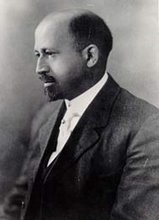
I, like many in my generation, have been fortunate in my life and have had a great number of wonderful opportunities. Some may consider me to be a part of black history. But we do a great disservice to the concept of black history recognition if we fail to understand that any success that I have had, cannot be viewed in isolation. I stood, and stand, on the shoulders of many other black Americans. Admittedly, the identities of some of these people, through the passage of time, have become lost to us- the men, and women, who labored long in fields, who were later legally and systemically discriminated against, who were lynched by the hundreds in the century just past and those others who have been too long denied the fruits of our great American culture. The names of too many of these people, these heroes and heroines, are lost to us. But the names of others of these people should strike a resonant chord in the historical ear of all in our nation: Frederick Douglass, W.E.B. DuBois, Walter White, Langston Hughes, Marcus Garvey, Martin Luther King, Malcolm X, Joe Louis, Jackie Robinson, Charles Drew, Paul Robeson, Ralph Ellison, James Baldwin, Toni Morrison, Vivian Malone, Rosa Parks, Marion Anderson, Emmit Till. These are just some of the people who should be generally recognized and are just some of the people to whom all of us, black and white, owe such a debt of gratitude. It is on their broad shoulders that I stand as I hope that others will some day stand on my more narrow ones.
Black history is a subject worthy of study by all our nation's people. Blacks have played a unique, productive role in the development of America. Perhaps the greatest strength of the United States is the diversity of its people and to truly understand this country one must have knowledge of its constituent parts. But an unstudied, not discussed and ultimately misunderstood diversity can become a divisive force. An appreciation of the unique black past, acquired through the study of black history, will help lead to understanding and true compassion in the present, where it is still so sorely needed, and to a future where all of our people are truly valued.
Thank you.
Monday, January 19, 2009
MLK - Beyond "I Have A Dream"

This is an update to my annual MLK remembrance. I really wanted to post "A Knock At Midnight"... the greatest of all the MLK sermons/speeches in my opinion. But I have not been able to convert this sermon from my analog tape to digital. Unfortunately I don't have a Cassette-CD converter.
But there is still plenty of material here to read/watch/and listen to.
NPR has a story about a project by Jazz Bassist Christian McBribe showing his appreciation for Dr. King.
There is also a two hour special from American Routes, celebrating King and the Civil Rights Era through music...and pointing out the role of music during the height of the movement. Definitely a program that you should not miss. Listen while you can... I don't know how long the audio will be available.
Hear Hour 1
Hear Hour 2
I have also added "I've Been To the Mountaintop" in its entirety.
This is definitely an historic year (already...just a few weeks into 2009). Barack Obama... the first non-white U.S. President...or first U.S. President of Color will be sworn in the day after Kings birthday is officially observed. If that's not enough, Obama- the product of the Union of a Kenyan Father and White mother from Kansas- will take the oath of office at the U.S. Capitol built largely with African Slave labor. He will then enter the White House for the first time as President... a House built by African Slaves. They don't even attempt to make movies with pendulums that swing this far... because it just seems too unreal. A journey like this has only been the purview of Comedy writers, and the SNL skits... because it just couldn't happen in real life. It was only a couple of years ago that there was a TV drama and a movie depicting a Black President in a serious role.
I just hope Obama understands Kings' message in The Drum Major Instinct, and Kings' passion for international peace, and his feelings toward growing U.S. militarism & imperialist tendencies.... a passion which was just as strong as his passion for Civil Rights, if not stronger. I can already conclude that Hillary Clinton does not get it...and has probably never gotten it, and never will. This is a woman who has been quoted threatening Iran.... saying that she would
***************************
NOTE:
And while we remember the true essence of King, I can't help but mention what some of the Traditional "Black Leaders" & Black "Luminaries" will be up to on this day... apparently they will be at another Corporate event... (surprise surprise) using the King Holiday & the Obama inauguration to help Pepsi Co. with branding and relaunching their products under a new image, with the motto of "Refreshing the World". Are they kidding me? I thought this was a joke at first glance... but it's apparently true. There is something disturbing about the whole idea. Maybe it's just me. And i'm a little disappointed to see Dr. West participating in such an event.
**************************

There was much more to Dr. King than I Have A Dream. Americans will be bombarded today (and in February) with loops of the famous I Have A Dream speech being played 10,000 times. But you won't see or hear the speech here. The U.S. uses that speech as a way to disarm Kings message. It has been ironic to watch the U.S. government "honor" King over the last few years, particularly while the U.S. has been at war, yet they avoid mentioning anything about his well known moral and political position on War....and the War in Vietnam in particular. Just take out the word Vietnam and replace it with Iraq, and it sounds like King is talking in the present.
It's a shame that his Holiday is not truly celebrated in this country. Most people see it as just another day. Most White Americans barely recognize the day. It's a shame and very ironic that a man who spoke against segregation has a national Holiday that is segregated in terms of how people recognize it.
Below, I have included 5 great speeches from Dr King, some of them dealing with his feelings about war.
What Would MLK Say About The World Today?
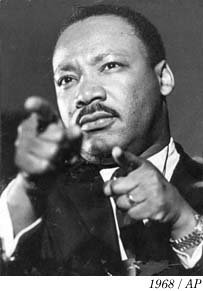
What Would Dr. King Think About What Was Going On In The World Today?
He basically told us 4 decades ago.... we were just a little late arriving to the show.
If we would just listen to these Prophets when they are here sounding the alarm, maybe we could avoid more disasters. Many of the things that King spoke of 4 decades ago, we see today. It is a combination of things not changing, and King being way ahead of his time, foretelling issues and threats decades ago that we are now seeing develop today in our lifetimes.
Listen to the speech The Drum Major Instinct, given in February of 1968. This is one of my favorite speeches, and one that never gets old. It is so relevant for today. It's also one of Kings great messages. However, his greatest & most powerful speech, in my opinion, has to be a speech titled "A Knock At Midnight". Scary speech. Unfortunately I don’t have A Knock At Midnight in a digital format. But Drum Major Instinct is also one of his great messages….one of my top 3 favorites.
I Have a Dream is a great speech but it is not his greatest work. But America often uses I Have a Dream to try to sanitize King, and box him into being a Civil Rights/Racial Equality leader. The fact is, between 1965 & 1968, King was the leading anti-war voice and leading voice for economic equality in the country. I think that is part of the reason that he was gunned down. This is the part of Kings history that is hardly ever told. It's the part of his history that America tries to smother every year when the nation goes through its so called "remembrance". If they really wanted to honor King they would rewrite the school books to tell the true story about his efforts. He was not just a civil rights leader. If they wanted to honor him, they would try to live up to his vision....a vision that went beyond race and civil rights. Peace was at the heart of his struggle. He was just as passionate as an anti-war advocate as he was as a civil rights advocate....and perhaps maybe even more so as a Peace advocate.
Other Great Speeches
Sticking Together
Beyond Vietnam (Speaking Out Against The Vietnam War in front of a national group of Clergy in New York, April 4, 1967; exactly one year before he died. )
See Text of Beyond Vietnam Speech
Related Article
Why I Oppose The War In Vietnam RIGHT CLICK AND SAVE FOR EASIER PLAYBACK (similar speech given in front of his own congregation at the Ebenezer Baptist Church)
But If Not
I've Been To The Mountain Top - His Final Speech, April 3, 1968, given in Memphis Tennessee. Under an unusually high number of death threats, and feeling ill, King went to speak anyway, braving the assassins and the bad weather.
::::::::::::::::::::::::::::::::::::::::::::::::::::
See a video interview with Rev. Joseph Lowery from a couple of years ago. Link To Webpage.

::::::::::::::::::::::::::::::::::::::::::::::::::::
Democracy Now Covers MLK
Great Story About Kings Last Hours In Memphis Helping the Sanitation Workers
::::::::::::::::::::::::::::::::::::::::::::::::::::::::
Great Article
Reclaiming King: Beyond “I Have A Dream” Read Here.
Monday, September 01, 2008
If You Smell What Barack is Cookin’
So I’ve decided to forget about my qualified support for Obama and have decided to just plain support his candidacy for President. Why? My sister is also a blogger. After last Thursday’s acceptance speech by Barack Obama at the Democratic National Convention she was moved to write something in her blog. This is what she had to say:
Liberal Arts Dude sez:
I must say I was very surprised reading the above from my sister. If you’ve read enough of this blog you will learn that I do plan on voting for Obama this coming November but my vote is a qualified one–Obama gets my vote but … and then a litany of disappointments and skepticism of the failed populist promises and betrayal of working peoples’ interests by the Democratic Party will follow.
Obama sounded like a true populist last Thursday. He said all the right things and got my hopes up that maybe, just maybe, he is sincere about this “Change” business and that if he wins in November, he will be able to change the culture of Washington DC and politics for the better. Because he is counting on the support and mandate from an organized and engaged citizenry. As he said, the election is really not about him -- it’s about us right? The citizenry whose hopes have been aroused by his candidacy and are now engaged and organized to participate in this grand experiment called Democracy.
I was impressed by the Obama campaign’s ability to elicit the type of response he did from my sister last night. Not a lot of politicians have been able to do that. Certainly not in my short lifetime. I’ve also never seen a campaign mobilize and raise money from so many ordinary people and get their hopes up.
An old story once said about President Franklin Delano Roosevelt, when a constituent met with him and made a great case for enacting reforms and policies. Roosevelt’s response: “That is all great. Now go out there and make me do it.” The story focuses on the importance and the role of the constituency in pressuring politicians from below in enacting the types of policies they want to happen.
Obama said he is running on a platform of Change. Let’s get out there and make him do it.
Cross posted in An Ordinary Person.
Little known fact: for about a year, while I was in high school, I contemplated a political career. I was a volunteer intern with the Democratic Coordinated Campaign in 2000, and I was hired as an intern for Senator Feingold’s office the summer between my junior and senior years. For a tiny while I thought to myself, you know what, I could be a damn fine president. Yes, I really did.
And then I realized, come on now, I’m biracial. I’m a woman. The daughter of an immigrant. It’s impossible in my lifetime. I can’t. I won’t ever be given the chance. Give up. And then I gave up.
Now imagine a girl, in high school, a teenager, mixed-race, black, Asian, Latina, native american, any girl who would have been held back by being who she was born as, imagine her having that dream today. And then watching Barack Obama’s speech tonight. And not giving up.
It’s the dreams of those young girls and boys that actually brought me to tears tonight, not anything that was said in that packed stadium in Denver. The tenuous hope, so easily taken away, that there could be a generation of children of color raised in an America with a biracial black man as its President. The dreams they’d be allowed to dream, and really believe in. The burdens of their parents that they wouldn’t feel at all. Just eight years ago, when I was in high school, dreaming, that seemed a complete impossibility. An impossibility.
I was wrong to give up, though I can’t take it back, my life is on a very different path now, and my heart is elsewhere. And I had my reasons not to hope. So far this election cycle I have been very, very doubtful about Senator Obama’s chances. He’s not President yet, he still may never be, but I’ve already been proven wrong. And I revel in it.
I didn’t believe that Americans were ready to nominate someone like Obama. Someone who looked like Obama, and had his background. I didn’t believe it because, as my family moved around the world, every time we moved back to the US, I was met with prejudice, nonacceptance, hostility, and ignorance. Not uniformly, not from everyone. But over and over again. In everyday incidences that, one by one, pounded it into my consciousness that I was not accepted, I did not belong, and it was because of what I look like, who my parents are, and where we come from. Somewhere in the back of my head, I believe that most people believe that I’m not a real American. And Barack Obama, a man with a background quite similar to mine in many respects, well, I couldn’t believe that people could put aside those prejudices that I’d felt so often in my life, and accept him as one of their own. I’m still not sure I do believe it.
But it’s not impossible anymore. And that’s enough to impress me, and amaze me, and humble me. I thought too little of America, because I was convinced that it thought so little of me, and of people like me.
Thanks for proving me wrong, Senator. You have my vote.
Liberal Arts Dude sez:
I must say I was very surprised reading the above from my sister. If you’ve read enough of this blog you will learn that I do plan on voting for Obama this coming November but my vote is a qualified one–Obama gets my vote but … and then a litany of disappointments and skepticism of the failed populist promises and betrayal of working peoples’ interests by the Democratic Party will follow.
Obama sounded like a true populist last Thursday. He said all the right things and got my hopes up that maybe, just maybe, he is sincere about this “Change” business and that if he wins in November, he will be able to change the culture of Washington DC and politics for the better. Because he is counting on the support and mandate from an organized and engaged citizenry. As he said, the election is really not about him -- it’s about us right? The citizenry whose hopes have been aroused by his candidacy and are now engaged and organized to participate in this grand experiment called Democracy.
I was impressed by the Obama campaign’s ability to elicit the type of response he did from my sister last night. Not a lot of politicians have been able to do that. Certainly not in my short lifetime. I’ve also never seen a campaign mobilize and raise money from so many ordinary people and get their hopes up.
An old story once said about President Franklin Delano Roosevelt, when a constituent met with him and made a great case for enacting reforms and policies. Roosevelt’s response: “That is all great. Now go out there and make me do it.” The story focuses on the importance and the role of the constituency in pressuring politicians from below in enacting the types of policies they want to happen.
Obama said he is running on a platform of Change. Let’s get out there and make him do it.
Cross posted in An Ordinary Person.
Friday, August 01, 2008
McSame and his Race Card Claim
The Field Negro tackles McSame's Race card assertions...in classic Field Negro fashion.
Friday, March 28, 2008
Condoleeza Rice - Conflicting and Confusing for me
I had read this article because of a link I found somewhere. A reader brought it up again, and though I've read it a couple of times, it just brings up the confusing feelings Condi Rice brings up in me.
Here's the article in the Washington Times:
Rest of the article is at the link above.
There's something accurate and almost elegant in calling Black folk ' A Founding Population'. It's very true. For all the talk about the ' Founding Fathers', we did found this country as much as anyone.
Dr. Rice confuses me, because, every once in awhile, she lets stuff 'slip' to let folks know she's not clueless in the least. She's just one big shade of gray.
Here's the article in the Washington Times:
Rice hits U.S. 'birth defect'
By Nicholas Kralev
March 28, 2008
Secretary of State Condoleezza Rice said yesterday that the United States still has trouble dealing with race because of a national "birth defect" that denied black Americans the opportunities given to whites at the country's very founding.
"Black Americans were a founding population," she said. "Africans and Europeans came here and founded this country together — Europeans by choice and Africans in chains. That's not a very pretty reality of our founding."
As a result, Miss Rice told editors and reporters at The Washington Times, "descendants of slaves did not get much of a head start, and I think you continue to see some of the effects of that."
"That particular birth defect makes it hard for us to confront it, hard for us to talk about it, and hard for us to realize that it has continuing relevance for who we are today," she said.
Rest of the article is at the link above.
There's something accurate and almost elegant in calling Black folk ' A Founding Population'. It's very true. For all the talk about the ' Founding Fathers', we did found this country as much as anyone.
Dr. Rice confuses me, because, every once in awhile, she lets stuff 'slip' to let folks know she's not clueless in the least. She's just one big shade of gray.
Wednesday, March 19, 2008
Obama's - 'More Perfect Union' : Some Afterthoughts
I knew that Obama would HAVE to give a speech like this one day. I believe HE knew that he would have to give a speech like this. I believe he thought it would be later on, in response to the REPUBLICANS. I don't think that he thought he'd have to give it in response to race-baiting that began with a fellow DEMOCRAT.
For me, the moment that I began to cry was this:
To be honest, I realize this was all I wanted from this speech.
In these two sentences Obama stood up for Black Humanity.
What was wrong with the Wright statements weren't that they were made - we have freedom of speech, he could say whatever he wanted. What was wrong with them was that White folk heard them, as Mama told me.
And, a kneejerk reaction, as is wont by those who have never wanted to understand any CONTEXT behind any Black Anger that could be considered justified. Condemn the remarks, wrap yourself in a flag, and of course, use that tried and true accusation of unpatriotic that can get thrown towards a Black person in a nanosecond. Collapsing a 36 year career of preaching into a 5 minute soundbite, AS IF that is the sum total of a man's life's work.
Obama stood up and said no, I won't let you collapse this man into this soundbite.
No, I will not let you dismiss the anger and the background from which is springs forth.
No, I will not let you turn the strength and the best of the Black Christian Tradition into something to be ashamed of, just because YOU don't understand it and have not bothered to try and understand it.
He stood up for Black Humanity - in all of its complexities.
Roland Martin (who did yoeman's work yesterday) kept on making this point: for all the talk about politics and religion, Barack Obama displayed his Christianity full force with that speech. Obama, in the above lines, mined one of the most persistent overarching themes in the Black Christian Church:
REDEMPTION.
Redemption is what makes Mama welcome home Pookie, Ray Ray and Big Boy back into her home after ANOTHER stint in prison. Because Mama is hoping that the prayers of her, Big Mama, and the women in Bible Study have reached his heart, and this time, he will become The Prodigal Son.
Redemption is what makes this community so unwilling to throw away anyone...after all, some of y'all are still holding out hope for Uncle Clarence (STOP, he's lost) and OJ (though I think you've come around on that one).
Redemption is a cornerstone of the Black Christian Tradition.
Barack Obama's candidacy was always, if it lived out its potential, going to be a turning point for America. Going to be that Racial Rorschach Test. Thrown into a crucible and pushing forth. Obama could have gone safe and conventional with his speech. He didn't. He put it out there, and chose the harder road. It was the most Presidential thing I've seen in a candidate in my lifetime. I feel like I've been waiting for it my whole life.
I want to thank Senator Obama.
I thought this image was powerful and wanted to end with it:

Michelle Obama in Philadelphia Yesterday
For me, the moment that I began to cry was this:
He (Wright) contains within him the contradictions – the good and the bad – of the community that he has served diligently for so many years.
I can no more disown him than I can disown the black community.
To be honest, I realize this was all I wanted from this speech.
In these two sentences Obama stood up for Black Humanity.
What was wrong with the Wright statements weren't that they were made - we have freedom of speech, he could say whatever he wanted. What was wrong with them was that White folk heard them, as Mama told me.
And, a kneejerk reaction, as is wont by those who have never wanted to understand any CONTEXT behind any Black Anger that could be considered justified. Condemn the remarks, wrap yourself in a flag, and of course, use that tried and true accusation of unpatriotic that can get thrown towards a Black person in a nanosecond. Collapsing a 36 year career of preaching into a 5 minute soundbite, AS IF that is the sum total of a man's life's work.
Obama stood up and said no, I won't let you collapse this man into this soundbite.
No, I will not let you dismiss the anger and the background from which is springs forth.
No, I will not let you turn the strength and the best of the Black Christian Tradition into something to be ashamed of, just because YOU don't understand it and have not bothered to try and understand it.
He stood up for Black Humanity - in all of its complexities.
Roland Martin (who did yoeman's work yesterday) kept on making this point: for all the talk about politics and religion, Barack Obama displayed his Christianity full force with that speech. Obama, in the above lines, mined one of the most persistent overarching themes in the Black Christian Church:
REDEMPTION.
Redemption is what makes Mama welcome home Pookie, Ray Ray and Big Boy back into her home after ANOTHER stint in prison. Because Mama is hoping that the prayers of her, Big Mama, and the women in Bible Study have reached his heart, and this time, he will become The Prodigal Son.
Redemption is what makes this community so unwilling to throw away anyone...after all, some of y'all are still holding out hope for Uncle Clarence (STOP, he's lost) and OJ (though I think you've come around on that one).
Redemption is a cornerstone of the Black Christian Tradition.
Barack Obama's candidacy was always, if it lived out its potential, going to be a turning point for America. Going to be that Racial Rorschach Test. Thrown into a crucible and pushing forth. Obama could have gone safe and conventional with his speech. He didn't. He put it out there, and chose the harder road. It was the most Presidential thing I've seen in a candidate in my lifetime. I feel like I've been waiting for it my whole life.
I want to thank Senator Obama.
I thought this image was powerful and wanted to end with it:

Michelle Obama in Philadelphia Yesterday
Tuesday, March 18, 2008
Obama's Speech Today
"A More Perfect Union"
Remarks of Senator Barack Obama
Constitution Center
Tuesday, March 18th, 2008
Philadelphia, Pennsylvania
As Prepared for Delivery
"We the people, in order to form a more perfect union."
Two hundred and twenty one years ago, in a hall that still stands across the street, a group of men gathered and, with these simple words, launched America's improbable experiment in democracy. Farmers and scholars; statesmen and patriots who had traveled across an ocean to escape tyranny and persecution finally made real their declaration of independence at a Philadelphia convention that lasted through the spring of 1787.
The document they produced was eventually signed but ultimately unfinished. It was stained by this nation's original sin of slavery, a question that divided the colonies and brought the convention to a stalemate until the founders chose to allow the slave trade to continue for at least twenty more years, and to leave any final resolution to future generations.
Of course, the answer to the slavery question was already embedded within our Constitution – a Constitution that had at is very core the ideal of equal citizenship under the law; a Constitution that promised its people liberty, and justice, and a union that could be and should be perfected over time.
And yet words on a parchment would not be enough to deliver slaves from bondage, or provide men and women of every color and creed their full rights and obligations as citizens of the United States. What would be needed were Americans in successive generations who were willing to do their part – through protests and struggle, on the streets and in the courts, through a civil war and civil disobedience and always at great risk - to narrow that gap between the promise of our ideals and the reality of their time.
This was one of the tasks we set forth at the beginning of this campaign – to continue the long march of those who came before us, a march for a more just, more equal, more free, more caring and more prosperous America. I chose to run for the presidency at this moment in history because I believe deeply that we cannot solve the challenges of our time unless we solve them together – unless we perfect our union by understanding that we may have different stories, but we hold common hopes; that we may not look the same and we may not have come from the same place, but we all want to move in the same direction – towards a better future for of children and our grandchildren.
This belief comes from my unyielding faith in the decency and generosity of the American people. But it also comes from my own American story.
I am the son of a black man from Kenya and a white woman from Kansas. I was raised with the help of a white grandfather who survived a Depression to serve in Patton's Army during World War II and a white grandmother who worked on a bomber assembly line at Fort Leavenworth while he was overseas. I've gone to some of the best schools in America and lived in one of the world's poorest nations. I am married to a black American who carries within her the blood of slaves and slaveowners – an inheritance we pass on to our two precious daughters. I have brothers, sisters, nieces, nephews, uncles and cousins, of every race and every hue, scattered across three continents, and for as long as I live, I will never forget that in no other country on Earth is my story even possible.
It's a story that hasn't made me the most conventional candidate. But it is a story that has seared into my genetic makeup the idea that this nation is more than the sum of its parts – that out of many, we are truly one.
Throughout the first year of this campaign, against all predictions to the contrary, we saw how hungry the American people were for this message of unity. Despite the temptation to view my candidacy through a purely racial lens, we won commanding victories in states with some of the whitest populations in the country. In South Carolina, where the Confederate Flag still flies, we built a powerful coalition of African Americans and white Americans.
This is not to say that race has not been an issue in the campaign. At various stages in the campaign, some commentators have deemed me either "too black" or "not black enough." We saw racial tensions bubble to the surface during the week before the South Carolina primary. The press has scoured every exit poll for the latest evidence of racial polarization, not just in terms of white and black, but black and brown as well.
And yet, it has only been in the last couple of weeks that the discussion of race in this campaign has taken a particularly divisive turn.
On one end of the spectrum, we've heard the implication that my candidacy is somehow an exercise in affirmative action; that it's based solely on the desire of wide-eyed liberals to purchase racial reconciliation on the cheap. On the other end, we've heard my former pastor, Reverend Jeremiah Wright, use incendiary language to express views that have the potential not only to widen the racial divide, but views that denigrate both the greatness and the goodness of our nation; that rightly offend white and black alike.
I have already condemned, in unequivocal terms, the statements of Reverend Wright that have caused such controversy. For some, nagging questions remain. Did I know him to be an occasionally fierce critic of American domestic and foreign policy? Of course. Did I ever hear him make remarks that could be considered controversial while I sat in church? Yes. Did I strongly disagree with many of his political views? Absolutely – just as I'm sure many of you have heard remarks from your pastors, priests, or rabbis with which you strongly disagreed.
But the remarks that have caused this recent firestorm weren't simply controversial. They weren't simply a religious leader's effort to speak out against perceived injustice. Instead, they expressed a profoundly distorted view of this country – a view that sees white racism as endemic, and that elevates what is wrong with America above all that we know is right with America; a view that sees the conflicts in the Middle East as rooted primarily in the actions of stalwart allies like Israel, instead of emanating from the perverse and hateful ideologies of radical Islam.
As such, Reverend Wright's comments were not only wrong but divisive, divisive at a time when we need unity; racially charged at a time when we need to come together to solve a set of monumental problems – two wars, a terrorist threat, a falling economy, a chronic health care crisis and potentially devastating climate change; problems that are neither black or white or Latino or Asian, but rather problems that confront us all.
Given my background, my politics, and my professed values and ideals, there will no doubt be those for whom my statements of condemnation are not enough. Why associate myself with Reverend Wright in the first place, they may ask? Why not join another church? And I confess that if all that I knew of Reverend Wright were the snippets of those sermons that have run in an endless loop on the television and You Tube, or if Trinity United Church of Christ conformed to the caricatures being peddled by some commentators, there is no doubt that I would react in much the same way
But the truth is, that isn't all that I know of the man. The man I met more than twenty years ago is a man who helped introduce me to my Christian faith, a man who spoke to me about our obligations to love one another; to care for the sick and lift up the poor. He is a man who served his country as a U.S. Marine; who has studied and lectured at some of the finest universities and seminaries in the country, and who for over thirty years led a church that serves the community by doing God's work here on Earth – by housing the homeless, ministering to the needy, providing day care services and scholarships and prison ministries, and reaching out to those suffering from HIV/AIDS.
In my first book, Dreams From My Father, I described the experience of my first service at Trinity:
"People began to shout, to rise from their seats and clap and cry out, a forceful wind carrying the reverend's voice up into the rafters….And in that single note – hope! – I heard something else; at the foot of that cross, inside the thousands of churches across the city, I imagined the stories of ordinary black people merging with the stories of David and Goliath, Moses and Pharaoh, the Christians in the lion's den, Ezekiel's field of dry bones. Those stories – of survival, and freedom, and hope – became our story, my story; the blood that had spilled was our blood, the tears our tears; until this black church, on this bright day, seemed once more a vessel carrying the story of a people into future generations and into a larger world. Our trials and triumphs became at once unique and universal, black and more than black; in chronicling our journey, the stories and songs gave us a means to reclaim memories that we didn't need to feel shame about…memories that all people might study and cherish – and with which we could start to rebuild."
That has been my experience at Trinity. Like other predominantly black churches across the country, Trinity embodies the black community in its entirety – the doctor and the welfare mom, the model student and the former gang-banger. Like other black churches, Trinity's services are full of raucous laughter and sometimes bawdy humor. They are full of dancing, clapping, screaming and shouting that may seem jarring to the untrained ear. The church contains in full the kindness and cruelty, the fierce intelligence and the shocking ignorance, the struggles and successes, the love and yes, the bitterness and bias that make up the black experience in America.
And this helps explain, perhaps, my relationship with Reverend Wright. As imperfect as he may be, he has been like family to me. He strengthened my faith, officiated my wedding, and baptized my children. Not once in my conversations with him have I heard him talk about any ethnic group in derogatory terms, or treat whites with whom he interacted with anything but courtesy and respect. He contains within him the contradictions – the good and the bad – of the community that he has served diligently for so many years.
I can no more disown him than I can disown the black community. I can no more disown him than I can my white grandmother – a woman who helped raise me, a woman who sacrificed again and again for me, a woman who loves me as much as she loves anything in this world, but a woman who once confessed her fear of black men who passed by her on the street, and who on more than one occasion has uttered racial or ethnic stereotypes that made me cringe.
These people are a part of me. And they are a part of America, this country that I love.
Some will see this as an attempt to justify or excuse comments that are simply inexcusable. I can assure you it is not. I suppose the politically safe thing would be to move on from this episode and just hope that it fades into the woodwork. We can dismiss Reverend Wright as a crank or a demagogue, just as some have dismissed Geraldine Ferraro, in the aftermath of her recent statements, as harboring some deep-seated racial bias.
But race is an issue that I believe this nation cannot afford to ignore right now. We would be making the same mistake that Reverend Wright made in his offending sermons about America – to simplify and stereotype and amplify the negative to the point that it distorts reality.
The fact is that the comments that have been made and the issues that have surfaced over the last few weeks reflect the complexities of race in this country that we've never really worked through – a part of our union that we have yet to perfect. And if we walk away now, if we simply retreat into our respective corners, we will never be able to come together and solve challenges like health care, or education, or the need to find good jobs for every American.
Understanding this reality requires a reminder of how we arrived at this point. As William Faulkner once wrote, "The past isn't dead and buried. In fact, it isn't even past." We do not need to recite here the history of racial injustice in this country. But we do need to remind ourselves that so many of the disparities that exist in the African-American community today can be directly traced to inequalities passed on from an earlier generation that suffered under the brutal legacy of slavery and Jim Crow.
Segregated schools were, and are, inferior schools; we still haven't fixed them, fifty years after Brown v. Board of Education, and the inferior education they provided, then and now, helps explain the pervasive achievement gap between today's black and white students.
Legalized discrimination - where blacks were prevented, often through violence, from owning property, or loans were not granted to African-American business owners, or black homeowners could not access FHA mortgages, or blacks were excluded from unions, or the police force, or fire departments – meant that black families could not amass any meaningful wealth to bequeath to future generations. That history helps explain the wealth and income gap between black and white, and the concentrated pockets of poverty that persists in so many of today's urban and rural communities.
A lack of economic opportunity among black men, and the shame and frustration that came from not being able to provide for one's family, contributed to the erosion of black families – a problem that welfare policies for many years may have worsened. And the lack of basic services in so many urban black neighborhoods – parks for kids to play in, police walking the beat, regular garbage pick-up and building code enforcement – all helped create a cycle of violence, blight and neglect that continue to haunt us.
This is the reality in which Reverend Wright and other African-Americans of his generation grew up. They came of age in the late fifties and early sixties, a time when segregation was still the law of the land and opportunity was systematically constricted. What's remarkable is not how many failed in the face of discrimination, but rather how many men and women overcame the odds; how many were able to make a way out of no way for those like me who would come after them.
But for all those who scratched and clawed their way to get a piece of the American Dream, there were many who didn't make it – those who were ultimately defeated, in one way or another, by discrimination. That legacy of defeat was passed on to future generations – those young men and increasingly young women who we see standing on street corners or languishing in our prisons, without hope or prospects for the future. Even for those blacks who did make it, questions of race, and racism, continue to define their worldview in fundamental ways. For the men and women of Reverend Wright's generation, the memories of humiliation and doubt and fear have not gone away; nor has the anger and the bitterness of those years. That anger may not get expressed in public, in front of white co-workers or white friends. But it does find voice in the barbershop or around the kitchen table. At times, that anger is exploited by politicians, to gin up votes along racial lines, or to make up for a politician's own failings.
And occasionally it finds voice in the church on Sunday morning, in the pulpit and in the pews. The fact that so many people are surprised to hear that anger in some of Reverend Wright's sermons simply reminds us of the old truism that the most segregated hour in American life occurs on Sunday morning. That anger is not always productive; indeed, all too often it distracts attention from solving real problems; it keeps us from squarely facing our own complicity in our condition, and prevents the African-American community from forging the alliances it needs to bring about real change. But the anger is real; it is powerful; and to simply wish it away, to condemn it without understanding its roots, only serves to widen the chasm of misunderstanding that exists between the races.
In fact, a similar anger exists within segments of the white community. Most working- and middle-class white Americans don't feel that they have been particularly privileged by their race. Their experience is the immigrant experience – as far as they're concerned, no one's handed them anything, they've built it from scratch. They've worked hard all their lives, many times only to see their jobs shipped overseas or their pension dumped after a lifetime of labor. They are anxious about their futures, and feel their dreams slipping away; in an era of stagnant wages and global competition, opportunity comes to be seen as a zero sum game, in which your dreams come at my expense. So when they are told to bus their children to a school across town; when they hear that an African American is getting an advantage in landing a good job or a spot in a good college because of an injustice that they themselves never committed; when they're told that their fears about crime in urban neighborhoods are somehow prejudiced, resentment builds over time.
Like the anger within the black community, these resentments aren't always expressed in polite company. But they have helped shape the political landscape for at least a generation. Anger over welfare and affirmative action helped forge the Reagan Coalition. Politicians routinely exploited fears of crime for their own electoral ends. Talk show hosts and conservative commentators built entire careers unmasking bogus claims of racism while dismissing legitimate discussions of racial injustice and inequality as mere political correctness or reverse racism.
Just as black anger often proved counterproductive, so have these white resentments distracted attention from the real culprits of the middle class squeeze – a corporate culture rife with inside dealing, questionable accounting practices, and short-term greed; a Washington dominated by lobbyists and special interests; economic policies that favor the few over the many. And yet, to wish away the resentments of white Americans, to label them as misguided or even racist, without recognizing they are grounded in legitimate concerns – this too widens the racial divide, and blocks the path to understanding.
This is where we are right now. It's a racial stalemate we've been stuck in for years. Contrary to the claims of some of my critics, black and white, I have never been so naïve as to believe that we can get beyond our racial divisions in a single election cycle, or with a single candidacy – particularly a candidacy as imperfect as my own.
But I have asserted a firm conviction – a conviction rooted in my faith in God and my faith in the American people – that working together we can move beyond some of our old racial wounds, and that in fact we have no choice is we are to continue on the path of a more perfect union.
For the African-American community, that path means embracing the burdens of our past without becoming victims of our past. It means continuing to insist on a full measure of justice in every aspect of American life. But it also means binding our particular grievances – for better health care, and better schools, and better jobs - to the larger aspirations of all Americans -- the white woman struggling to break the glass ceiling, the white man whose been laid off, the immigrant trying to feed his family. And it means taking full responsibility for own lives – by demanding more from our fathers, and spending more time with our children, and reading to them, and teaching them that while they may face challenges and discrimination in their own lives, they must never succumb to despair or cynicism; they must always believe that they can write their own destiny.
Ironically, this quintessentially American – and yes, conservative – notion of self-help found frequent expression in Reverend Wright's sermons. But what my former pastor too often failed to understand is that embarking on a program of self-help also requires a belief that society can change.
The profound mistake of Reverend Wright's sermons is not that he spoke about racism in our society. It's that he spoke as if our society was static; as if no progress has been made; as if this country – a country that has made it possible for one of his own members to run for the highest office in the land and build a coalition of white and black; Latino and Asian, rich and poor, young and old -- is still irrevocably bound to a tragic past. But what we know -- what we have seen – is that America can change. That is true genius of this nation. What we have already achieved gives us hope – the audacity to hope – for what we can and must achieve tomorrow.
In the white community, the path to a more perfect union means acknowledging that what ails the African-American community does not just exist in the minds of black people; that the legacy of discrimination - and current incidents of discrimination, while less overt than in the past - are real and must be addressed. Not just with words, but with deeds – by investing in our schools and our communities; by enforcing our civil rights laws and ensuring fairness in our criminal justice system; by providing this generation with ladders of opportunity that were unavailable for previous generations. It requires all Americans to realize that your dreams do not have to come at the expense of my dreams; that investing in the health, welfare, and education of black and brown and white children will ultimately help all of America prosper.
In the end, then, what is called for is nothing more, and nothing less, than what all the world's great religions demand – that we do unto others as we would have them do unto us. Let us be our brother's keeper, Scripture tells us. Let us be our sister's keeper. Let us find that common stake we all have in one another, and let our politics reflect that spirit as well.
For we have a choice in this country. We can accept a politics that breeds division, and conflict, and cynicism. We can tackle race only as spectacle – as we did in the OJ trial – or in the wake of tragedy, as we did in the aftermath of Katrina - or as fodder for the nightly news. We can play Reverend Wright's sermons on every channel, every day and talk about them from now until the election, and make the only question in this campaign whether or not the American people think that I somehow believe or sympathize with his most offensive words. We can pounce on some gaffe by a Hillary supporter as evidence that she's playing the race card, or we can speculate on whether white men will all flock to John McCain in the general election regardless of his policies.
We can do that.
But if we do, I can tell you that in the next election, we'll be talking about some other distraction. And then another one. And then another one. And nothing will change.
That is one option. Or, at this moment, in this election, we can come together and say, "Not this time." This time we want to talk about the crumbling schools that are stealing the future of black children and white children and Asian children and Hispanic children and Native American children. This time we want to reject the cynicism that tells us that these kids can't learn; that those kids who don't look like us are somebody else's problem. The children of America are not those kids, they are our kids, and we will not let them fall behind in a 21st century economy. Not this time.
This time we want to talk about how the lines in the Emergency Room are filled with whites and blacks and Hispanics who do not have health care; who don't have the power on their own to overcome the special interests in Washington, but who can take them on if we do it together.
This time we want to talk about the shuttered mills that once provided a decent life for men and women of every race, and the homes for sale that once belonged to Americans from every religion, every region, every walk of life. This time we want to talk about the fact that the real problem is not that someone who doesn't look like you might take your job; it's that the corporation you work for will ship it overseas for nothing more than a profit.
This time we want to talk about the men and women of every color and creed who serve together, and fight together, and bleed together under the same proud flag. We want to talk about how to bring them home from a war that never should've been authorized and never should've been waged, and we want to talk about how we'll show our patriotism by caring for them, and their families, and giving them the benefits they have earned.
I would not be running for President if I didn't believe with all my heart that this is what the vast majority of Americans want for this country. This union may never be perfect, but generation after generation has shown that it can always be perfected. And today, whenever I find myself feeling doubtful or cynical about this possibility, what gives me the most hope is the next generation – the young people whose attitudes and beliefs and openness to change have already made history in this election.
There is one story in particularly that I'd like to leave you with today – a story I told when I had the great honor of speaking on Dr. King's birthday at his home church, Ebenezer Baptist, in Atlanta.
There is a young, twenty-three year old white woman named Ashley Baia who organized for our campaign in Florence, South Carolina. She had been working to organize a mostly African-American community since the beginning of this campaign, and one day she was at a roundtable discussion where everyone went around telling their story and why they were there.
And Ashley said that when she was nine years old, her mother got cancer. And because she had to miss days of work, she was let go and lost her health care. They had to file for bankruptcy, and that's when Ashley decided that she had to do something to help her mom.
She knew that food was one of their most expensive costs, and so Ashley convinced her mother that what she really liked and really wanted to eat more than anything else was mustard and relish sandwiches. Because that was the cheapest way to eat.
She did this for a year until her mom got better, and she told everyone at the roundtable that the reason she joined our campaign was so that she could help the millions of other children in the country who want and need to help their parents too.
Now Ashley might have made a different choice. Perhaps somebody told her along the way that the source of her mother's problems were blacks who were on welfare and too lazy to work, or Hispanics who were coming into the country illegally. But she didn't. She sought out allies in her fight against injustice.
Anyway, Ashley finishes her story and then goes around the room and asks everyone else why they're supporting the campaign. They all have different stories and reasons. Many bring up a specific issue. And finally they come to this elderly black man who's been sitting there quietly the entire time. And Ashley asks him why he's there. And he does not bring up a specific issue. He does not say health care or the economy. He does not say education or the war. He does not say that he was there because of Barack Obama. He simply says to everyone in the room, "I am here because of Ashley."
"I'm here because of Ashley." By itself, that single moment of recognition between that young white girl and that old black man is not enough. It is not enough to give health care to the sick, or jobs to the jobless, or education to our children.
But it is where we start. It is where our union grows stronger. And as so many generations have come to realize over the course of the two-hundred and twenty one years since a band of patriots signed that document in Philadelphia, that is where the perfection begins.
Subscribe to:
Posts (Atom)


 Posts


