When dissecting the ongoing crisis in Chicago, we must inevitably ask why elected officials and policy leaders have no readily identifiable solution for Chicago’s higher murder rate. One reason is simply that Chicago is just an extreme example of America’s murderous culture.
A second reason, one favored by fans of the 1965 Moynihan Report, is...read the rest here.
After more than six months of marveling at Mitt Romney's propensity for falsehoods, I have to admit it was unsettling to see his campaign's new attack ad, launched yesterday. The spot accuses President Obama of making "untrue" claims about Romney shipping jobs overseas -- Obama's claims are actually quite credible -- and concludes that the president is running a "dishonest campaign."
Think about that for a moment. The candidate whose entire campaign has been built on one falsehood after another, the candidate whose dishonesty is routinely characterized as "almost pathological," the candidate whose near-constant lying puts him in a league of his own among modern politicians, is complaining that his rival is taking liberties with the facts.
There's dishonesty in politics, and then there's meta-dishonesty in politics.
Romney's spokesperson this week declared, "America deserves ... a president who's willing to tell the truth." That seems more than fair. Perhaps the Romney camp can reevaluate that demand after reading the 25th installment of my weekly series, chronicling Mitt's mendacity.
1. In an interview with Fox Business Network's Neil Cavuto, Romney insisted, "Obamacare is killing jobs."
There is literally no evidence to support this claim in any way.
2. In the same interview, Romney, asked about his tax returns, said, "We have of course released all of the financial statements that are required by law and then released two years of tax returns."
Actually, he's only released his tax returns for one full year. Two years wouldn't be enough, but it'd be an improvement.
3. Romney also told Cavuto, of the existing disclosure, "So tax information is there and other financial disclosure is there."
I wish that were true, but the whole point of the recent controversy is that "other financial disclosure" isn't there. We learned about his shell corporation in Bermuda based on one year's tax returns, but we don't know what other disclosures exist because Romney has kept previous returns hidden from the public.
A new Clutch magazine piece on marriage by Danielle Belton (who we also know as The Black Snob) only reinforces the notion (my belief) that it often has more to do with money than love. In the article, partly based on a Time magazine report, Belton emphasizes that marriage is more attainable and enduring for those with college educations and well paying jobs. I have seen this information before from previous articles. Although, I know of plenty of divorces where either both or one of the parties had a great job... so that may not provide the whole story. But statistically the argument offered in the article is probably correct.
This just supports the argument that I have made in the past that marriages today are more about money and less about any sort of genuine love bond between two people. Some of the best marriages that I have seen have been between two people who didn't have very much in terms of material possessions. Unfortunately most marriages don't consist of these kinds of relationships... but such marriages do exist (mostly see it with older generations... bonds that were made during eras when the focus tended to be something different).
It begs the question again... what are the women in these relationships actually marrying.... the man.... or the job title? The man or the earnings potential? The man or his fancy law degree? The person...or the lifestyle and the material things that they can provide? More often than not... women are seeking resources.... not men.
This reinforces the notion that this is a society awash in phony relationships and phony marriages.
And "getting a degree and a job" oversimplifies things. There are plenty of men with degrees who are employed. That doesn't necessarily lead to marriage....or even easy dating (I can attest to this). Whether marriage is attainable has more to do with what type of job you have. If you are an under-employed man.... having all of the degrees in the world won't help you. And in this economy, there are tons of educated men who are under-employed...and (largely as a result of their job/income status) are living single. So the title of the piece should probably read.... "a degree and a great paying career".
You hardly ever hear the word "love" when the topic is marriage. It seems as if these are simply convenient living contracts between two people.
This also supports the idea that there really is no incentive for a man to get married.... if this is all marriage really is. There is nothing in it for a man. If these are just arrangements about the use of resources (ie money and material possessions) mostly for the benefit of women, then it makes no sense for a man to enter into such a situation. If these arrangements are as phony and loveless as they (by all indications) appear to be... then there is almost nothing that a man can get out of it within the legal bond that he can't get outside of it as a single guy.
Am I missing something here? If I am, please explain it to me.
If I ever get married, I hope it's the old fashioned kind.
The fact that 270 Chicagoans have been murdered in just six months should shock all Americans into questioning what is going in America’s third largest city. Americans should be shocked into demanding a top-to-bottom review of all the causes leading to this onslaught: poverty, easy access to guns, police techniques, ignorance, and our own apathy.
I call her St. Louis' First Lady of Soul. But she is also a fine gospel singer, who at one time also dabbled in Jazz.
Bass was born in St. Louis in 1940, and was influenced early on by her musical family. Her mother, Martha Bass, was a noted gospel artist who performed with the Clara Ward Singers. Her younger brother, David Peaston, was a noted crooner in the 1990's. Bass began singing with her grandmother at around age 5, and was also influenced early on by the great Willie Mae Ford Smith.
Despite being a great gospel singer, it was soul & blues that eventually put her on the map. Bass would sneak out of the house when she was 17 years old to perform in blues clubs around St. Louis, telling her parents that she was engaging in more wholesome activities. Bass was discovered by St. Louis R&B man Oliver Sain - band leader for Little Milton Campbell and producer extraordinaire at the time, and figurative Chairman of St. Louis music in the 1960's and 70's. Bass would eventually become pianist for the band, but occasionally provided vocals. During this period, St. Louis was a hotbed for talent. Grant Green, Albert King, David Sanborn, Michael McDonald, Donny Hathaway, & Tina Turner, to name a few, also used St. Louis as a training ground in some of the very same clubs that Bass trained in. It is no surprise that Bass eventually married another St. Louis great, Lester Bowie, one of the kings of Avant-garde Jazz. Bass briefly toured with Bowie and his band, The Art Ensemble of Chicago.
Bass is probably best known for her hits 'Rescue Me' (which people often mistakenly credit to Aretha Franklin), and 'Don't Mess Up A Good Thing' a duet with singer Bobby McClure. 'Rescue Me' put Chess Records back on the map after a slump, and became part of the soundtrack of America. The song has since been used in commercials to sell all sorts of products. Singer, songwriter & actress Alicia Keys portrayed Bass in the TV series 'American Dreams' (I tried to like that show, but was never able to become a fan). However, Bass' best work can be found on the album "Free", a lost classic recorded in 1972, and produced by Oliver Sain. Bass also has a number of other great singles.
In debates about the great female voices of 60's & 70's American Soul, Bass is never mentioned. But her rich Mezzo-Soprano voice - a combination of the rawness of an Etta James, and the hearty texture of the great Gladys Knight - was among the best of the era. Unfortunately, with so many great singers on the national stage at the time, she was another great voice among many. It was hard for singers to stand out during that period, especially with competition from Stax and Motown. She would undoubtedly have been a bigger name in another era or perhaps if she had not taken such long breaks. But she had a more noble calling - raising a family being one. She put her family, her values and principles above commercial success. That's more than we can say for most of the singers in the spotlight today.
Put your headphones on!
Lucky In Love
Everyday I Have To Cry
I'm Leaving The Choice To You
The Soul of a Man
Talking About Freedom
Would also recommend her gospel.... if you are remotely into gospel music... good stuff.
On Tuesday I wrote of just some of the pressing problems facing higher education: skyrocketing tuition, declining financial support from state governments, fewer Pell Grant dollars, and slashed research budgets. As a result of these unwise attacks on Higher Education, I have decided to create a political action committee, the Reach Higher PAC.
U.S. President Barack Obama's daughter Malia walks with family dog Bo to receive the 2011 White House Christmas Tree at the White House in Washington, November 25, 2011.
---REUTERS/Yuri Gripas
Mr. President, Friends and Fellow Citizens: He who could address this audience without a quailing sensation, has stronger nerves than I have. I do not remember ever to have appeared as a speaker before any assembly more shrinkingly, nor with greater distrust of my ability, than I do this day. A feeling has crept over me, quite unfavorable to the exercise of my limited powers of speech. The task before me is one which requires much previous thought and study for its proper performance. I know that apologies of this sort are generally considered flat and unmeaning. I trust, however, that mine will not be so considered. Should I seem at ease, my appearance would much misrepresent me. The little experience I have had in addressing public meetings, in country schoolhouses, avails me nothing on the present occasion.
The papers and placards say, that I am to deliver a 4th [of] July oration. This certainly sounds large, and out of the common way, for it is true that I have often had the privilege to speak in this beautiful Hall, and to address many who now honor me with their presence. But neither their familiar faces, nor the perfect gage I think I have of Corinthian Hall, seems to free me from embarrassment.
The fact is, ladies and gentlemen, the distance between this platform and the slave plantation, from which I escaped, is considerable—and the difficulties to be overcome in getting from the latter to the former, are by no means slight. That I am here to-day is, to me, a matter of astonishment as well as of gratitude. You will not, therefore, be surprised, if in what I have to say. I evince no elaborate preparation, nor grace my speech with any high sounding exordium. With little experience and with less learning, I have been able to throw my thoughts hastily and imperfectly together; and trusting to your patient and generous indulgence, I will proceed to lay them before you.
This, for the purpose of this celebration, is the 4th of July. It is the birthday of your National Independence, and of your political freedom. This, to you, is what the Passover was to the emancipated people of God. It carries your minds back to the day, and to the act of your great deliverance; and to the signs, and to the wonders, associated with that act, and that day. This celebration also marks the beginning of another year of your national life; and reminds you that the Republic of America is now 76 years old. I am glad, fellow-citizens, that your nation is so young.
Seventy-six years, though a good old age for a man, is but a mere speck in the life of a nation. Three score years and ten is the allotted time for individual men; but nations number their years by thousands. According to this fact, you are, even now, only in the beginning of your national career, still lingering in the period of childhood. I repeat, I am glad this is so. There is hope in the thought, and hope is much needed, under the dark clouds which lower above the horizon. The eye of the reformer is met with angry flashes, portending disastrous times; but his heart may well beat lighter at the thought that America is young, and that she is still in the impressible stage of her existence. May he not hope that high lessons of wisdom, of justice and of truth, will yet give direction to her destiny? Were the nation older, the patriot’s heart might be sadder, and the reformer’s brow heavier. Its future might be shrouded in gloom, and the hope of its prophets go out in sorrow. There is consolation in the thought that America is young. Great streams are not easily turned from channels, worn deep in the course of ages. They may sometimes rise in quiet and stately majesty, and inundate the land, refreshing and fertilizing the earth with their mysterious properties. They may also rise in wrath and fury, and bear away, on their angry waves, the accumulated wealth of years of toil and hardship. They, however, gradually flow back to the same old channel, and flow on as serenely as ever. But, while the river may not be turned aside, it may dry up, and leave nothing behind but the withered branch, and the unsightly rock, to howl in the abyss-sweeping wind, the sad tale of departed glory. As with rivers so with nations.
Fellow-citizens, I shall not presume to dwell at length on the associations that cluster about this day. The simple story of it is that, 76 years ago, the people of this country were British subjects. The style and title of your "sovereign people" (in which you now glory) was not then born. You were under the British Crown . Your fathers esteemed the English Government as the home government; and England as the fatherland. This home government, you know, although a considerable distance from your home, did, in the exercise of its parental prerogatives, impose upon its colonial children, such restraints, burdens and limitations, as, in its mature judgment, it deemed wise, right and proper.
But, your fathers, who had not adopted the fashionable idea of this day, of the infallibility of government, and the absolute character of its acts, presumed to differ from the home government in respect to the wisdom and the justice of some of those burdens and restraints. They went so far in their excitement as to pronounce the measures of government unjust, unreasonable, and oppressive, and altogether such as ought not to be quietly submitted to. I scarcely need say, fellow-citizens, that my opinion of those measures fully accords with that of your fathers. Such a declaration of agreement on my part would not be worth much to anybody. It would, certainly, prove nothing, as to what part I might have taken, had I lived during the great controversy of 1776. To say now that America was right, and England wrong, is exceedingly easy. Everybody can say it; the dastard, not less than the noble brave, can flippantly discant on the tyranny of England towards the American Colonies. It is fashionable to do so; but there was a time when to pronounce against England, and in favor of the cause of the colonies, tried men’s souls. They who did so were accounted in their day, plotters of mischief, agitators and rebels, dangerous men. To side with the right, against the wrong, with the weak against the strong, and with the oppressed against the oppressor! here lies the merit, and the one which, of all others, seems unfashionable in our day. The cause of liberty may be stabbed by the men who glory in the deeds of your fathers. But, to proceed.
Feeling themselves harshly and unjustly treated by the home government, your fathers, like men of honesty, and men of spirit, earnestly sought redress. They petitioned and remonstrated; they did so in a decorous, respectful, and loyal manner. Their conduct was wholly unexceptionable. This, however, did not answer the purpose. They saw themselves treated with sovereign indifference, coldness and scorn. Yet they persevered. They were not the men to look back.
As the sheet anchor takes a firmer hold, when the ship is tossed by the storm, so did the cause of your fathers grow stronger, as it breasted the chilling blasts of kingly displeasure. The greatest and best of British statesmen admitted its justice, and the loftiest eloquence of the British Senate came to its support. But, with that blindness which seems to be the unvarying characteristic of tyrants, since Pharaoh and his hosts were drowned in the Red Sea, the British Government persisted in the exactions complained of.
The madness of this course, we believe, is admitted now, even by England; but we fear the lesson is wholly lost on our present ruler.
Oppression makes a wise man mad. Your fathers were wise men, and if they did not go mad, they became restive under this treatment. They felt themselves the victims of grievous wrongs, wholly incurable in their colonial capacity. With brave men there is always a remedy for oppression. Just here, the idea of a total separation of the colonies from the crown was born! It was a startling idea, much more so, than we, at this distance of time, regard it. The timid and the prudent (as has been intimated) of that day, were, of course, shocked and alarmed by it.
Such people lived then, had lived before, and will, probably, ever have a place on this planet; and their course, in respect to any great change, (no matter how great the good to be attained, or the wrong to be redressed by it), may be calculated with as much precision as can be the course of the stars. They hate all changes, but silver, gold and copper change! Of this sort of change they are always strongly in favor.
These people were called Tories in the days of your fathers; and the appellation, probably, conveyed the same idea that is meant by a more modern, though a somewhat less euphonious term, which we often find in our papers, applied to some of our old politicians.
Their opposition to the then dangerous thought was earnest and powerful; but, amid all their terror and affrighted vociferations against it, the alarming and revolutionary idea moved on, and the country with it.
On the 2d of July, 1776, the old Continental Congress, to the dismay of the lovers of ease, and the worshipers of property, clothed that dreadful idea with all the authority of national sanction. They did so in the form of a resolution; and as we seldom hit upon resolutions, drawn up in our day whose transparency is at all equal to this, it may refresh your minds and help my story if I read it. "Resolved, That these united colonies are, and of right, ought to be free and Independent States; that they are absolved from all allegiance to the British Crown; and that all political connection between them and the State of Great Britain is, and ought to be, dissolved."
Across the country institutions of Higher Education are under attack, facing countless obstacles in their pursuit of excellence. Surprisingly, many of these hurdles come from elected officials with a view of progress that is at best anti-intellectual and at worst anti-opportunity.
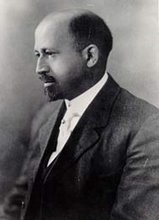
"The two parties have combined against us to nullify our power by a ‘gentleman's agreement' of non-recognition, no matter how we vote ... May God write us down as asses if ever again we are found putting our trust in either the Republican or the Democratic Parties." -- W.E.B. DuBois (1922)





 Posts


