Monday, July 13, 2009

All-Star Baseball Time in St. Louis


I was interested in going until I saw the ticket prices. Cheap seats and standing room tickets were starting around $400-$500 when I looked. I quickly came to my senses and realized how nice it would be to watch from home.

Home Run Derby tonight....and the game tomorrow.

Our friendly right wing radio people (Station KFTK 97.1 FM) have been suggesting to their listeners (in a roundabout way) that they should boo Obama when he shows up to throw out the first pitch tomorrow night. I doubt if they'll get enough people to take part....but it wouldn't surprise me if the boos are noticeable. Although the City is Obama Country... the people who can actually afford to attend baseball games tend to be a little more affluent, more Conservative and are from the suburbs, and in this case from different parts of the Country.

We shall see.

The Sonia Sotomayor Senate Hearings - Day 1

Today.... opening statements.

See Video

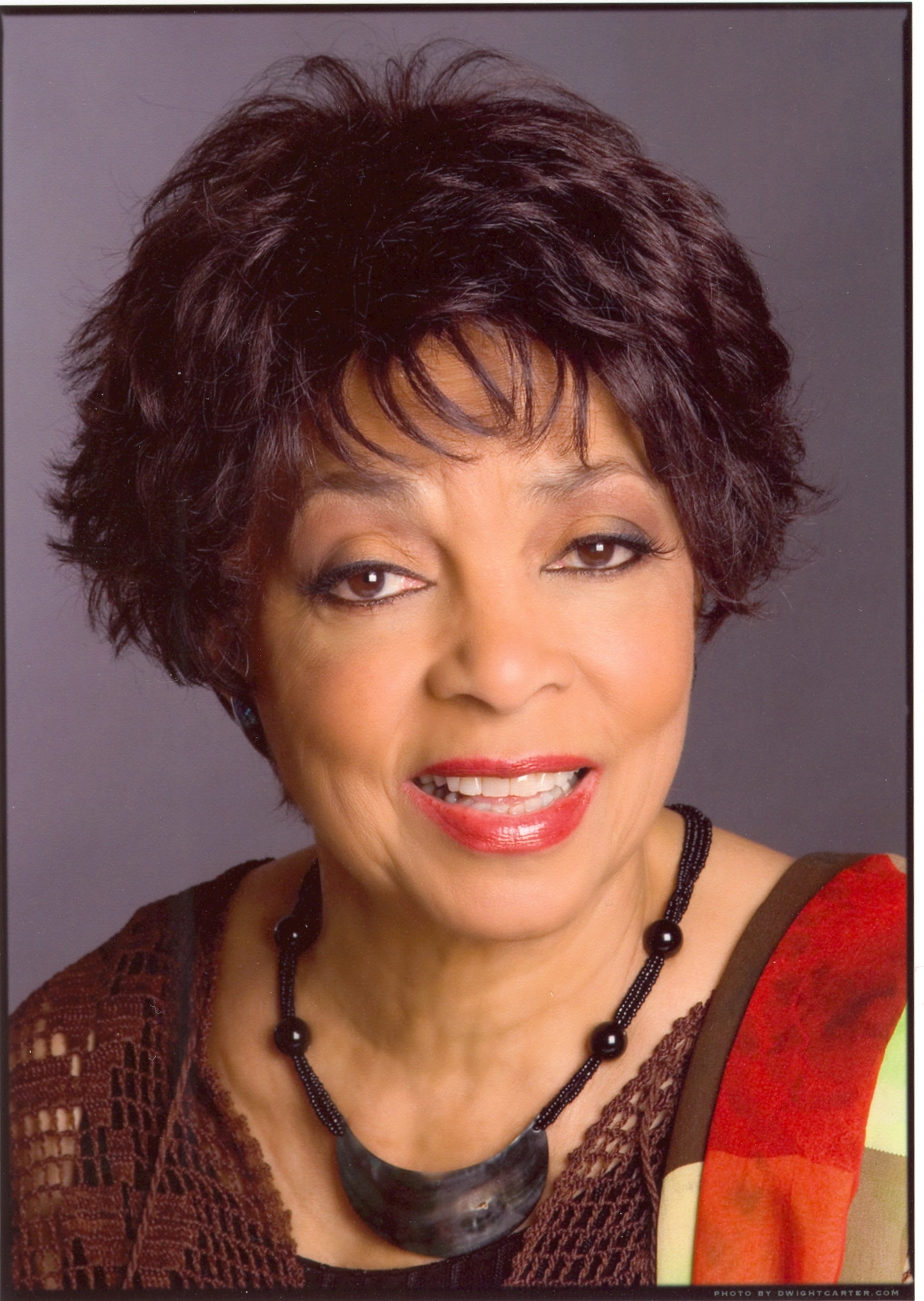
Dr. Regina Benjamin chosen for Surgeon General

reginabenjamin


From CNN.com:
Dr. Regina Benjamin is Surgeon General choice

WASHINGTON (CNN) -- President Obama announced Monday his choice for surgeon general -- Dr. Regina Benjamin, a 52-year-old family practice doctor who has spent most of her career tending to the needs of poor patients in a Gulf Coast clinic in Alabama.

"When people couldn't pay, she didn't charge them," Obama said. "When the clinic wasn't making money, she didn't take a salary for herself."

He called Benjamin "a relentless promoter" of programs to fight preventable illness.

Benjamin cited the toll of preventable illness as the reason her family was not with her at the announcement: Her father died with diabetes and high blood pressure; her older brother and only sibling died at age 44 of an HIV-related illness; her mother died of lung cancer after taking up smoking as a girl; her mother's twin brother could not attend because he is at home "struggling for each breath" after a lifetime of smoking.

"I cannot change my family's past, but I can be a voice to improve our nation's health for the future," she said. Watch for more on Benjamin »

Benjamin received a bachelor's degree in 1979 from Xavier University of Louisiana, attended Morehouse School of Medicine from 1980 to 1982, and received a doctor of medicine degree from the University of Alabama at Birmingham in 1984.

She completed her residency in family practice at the Medical Center of Central Georgia in 1987.

Her medical training was paid for by a federal program, the National Health Service Corps, under which medical students promise to work in areas with few doctors in exchange for free tuition, one year of service for every year of paid tuition.

Benjamin founded the Bayou La Batre Rural Health Clinic in 1990 in the fishing village of Bayou La Batre, Alabama, and has served as its CEO since.

Rest of article at link above.


From the Kaiser Foundation:
Regina Benjamin, M.D., M.B.A.

A graduate of Xavier University, Morehouse School of Medicine, and the University of Alabama School of Medicine, Dr. Regina Benjamin chose to return to the region that she grew up in, starting a family practice in Bayou la Batre, Alabama (a small shrimping village along the gulf coast). After several years moonlighting in emergency rooms and nursing homes to keep her practice open, and with an MBA from Tulane under her belt, Dr. Benjamin converted her medical office into a small rural health clinic dedicated to serving the large indigent population in her community.

Her extraordinary dedication and self-sacrifice have already won Dr. Benjamin national recognition. In 1995, she became the first African-American woman, and the first person under 40, to be elected to the American Medical Association (AMA) Board of Trustees. Dr. Benjamin also serves on the Board of Physicians for Human Rights.

Dr. Benjamin is a 1998 Mandela Award Winner, a former Kellogg National Fellow, has been featured as ABC Television's Person of the Week, and in 1996 was chosen by CBS This Morning as Woman of the Year.

Sunday, July 12, 2009

Evian's Roller Babies

Oh you know you like it.

I couldn't help but love this commercial. Although i'm not a fan of Rap, I did grow up on the early music of the genre and vividly remember this track. I listened to this music 20-25 years ago. The song (from Sugar Hill Gang), the boombox and the backdrop remind me a little of my days in Kansas in the Mid 1980's and my own boombox blaring as I played Basketball on the schoolyard Blacktop. The music also reminds me of my fathers famous Cookouts (definitely a simpler time).

I also can't live without my Evian (say whatever you want about the water.... I am not going to stop drinking it) :).

Saturday, July 11, 2009

Goodbye Ghana

OBAMA-AFRICA


OBAMA-AFRICA/

Obama Ghana

Obama Ghana

GHANA-US-AFRICA-OBAMA-DEPARTURE

GHANA-US-AFRICA-OBAMA-DEPARTURE

OBAMA-AFRICA/

OBAMA-AFRICA/

GHANA-US-OBAMA-DEPARTURE

GHANA OBAMA

GHANA-US-OBAMA-DEPARTURE

GHANA-US-OBAMA-DEPARTURE

GHANA-US-OBAMA-DEPARTURE

GHANA OBAMA

GHANA-US-AFRICA-OBAMA-DEPARTURE

The Obamas at Cape Coast Castle


President Obama's Speech to the Parliament of Ghana

Part 1


Part 2

The Obamas Visit Cape Coast Slave Castle

GHANA-US-OBAMA-CAPE-COAST
US President Barack Obama, First Lady Michelle Obama, their daughters Sasha and Malia stand at the entrance of the 'Door of No Return' during a guided tour in Cape Coast Castle, a former slavery outpost, in Cape Coast, Ghana, on July 11, 2009.
The visit marks Obama's first to subsaharan Africa as President.
-------AFP PHOTO / Saul LOEB


capecoastcastle
A view of a slave fortress in Cape Coast, Ghana in 1996. Hundreds of thousands of Africans were forced through its dungeons and loaded onto slave ships anchored along the Atlantic coastline.

GHANA-US-OBAMA-CAPE-COAST
US President Barack Obama speaks after touring Cape Coast Castle, in Cape Coast, Ghana, on July 11, 2009. Obama and his family made a "moving" visit to a former slave trading fort in Ghana during a landmark visit to the west African country. The Obamas went on a guided tour of Cape Coast Castle, formerly one of the continent's main outposts from where countless slaves were shipped trans-Atlantic to the Americas. Obama, the son of an African immigrant, and his wife Michelle, a descendant of African slaves, were accompanied on the tour by their daughters Malia and Sasha.
------------------------------AFP PHOTO / Saul LOEB


OBAMA-AFRICA/

Obama Ghana

OBAMA

GHANA-US-OBAMA-CAPE-COAST

OBAMA-AFRICA/

Obama Ghana


OBAMA-AFRICA/

OBAMA-AFRICA/


OBAMA
U.S. President Barack Obama leads his family from the slave holding cells inside Cape Coast Castle, a former slave holding facility, in the Ghanaian town of Cape Coast, July 11, 2009.
-----------REUTERS/Jason Reed


At Cape Coast Castle in Ghana, retracing slavery's steps

More Pictures from Ghana

GHANA-US-OBAMA
US President Barack Obama holds a child as he tours with US First Lady Michelle Obama the La General Hospital in Accra on July 11, 2009.
------------ AFP PHOTO / Saul LOEB


GHANA-US-MILLS-OBAMA
US President Barack Obama chats with his Ghanean counterpart John Atta-Mills on July 11, 2009 during breakfast with with First Lady Michelle Obama at Osu Castle, the government headquarters and a former slave trading fort, in Accra.
-------------------------------- AFP PHOTO / Saul LOEB


Obama Ghana

GHANA-US-OBAMA

GHANA-US-OBAMA
US President Barack Obama and First Lady Michelle Obama talk with pregnant women during a tour of the La General Hospital in Accra on July 11, 2009.
-------AFP PHOTO / Saul LOEB


Obama Ghana
President Barack Obama is accompanied by Speaker of Parliament Joyce Bamford-Addo, left, as during the playing of the Star Spangled Banner following his address to the Ghanaian Parliament in Accra, Ghana, Saturday, July 11, 2009.
---------AP Photo/Charles Dharapak


OBAMA-AFRICA
U.S. President Barack Obama's convoy leaves the presidential castle in Accra July 11, 2009.
---------REUTERS/Luc Gnago


GHANA-US-OBAMA
US President Barack Obama tours the La General Hospital in Accra on July 11, 2009. The visit marks Obama's first to subsaharan African as President. Huge crowds lined the streets of Accra hoping to catch a glimpse of the first Black US President, the son of an African immigrant, after he arrived from the Group of Eight summit in Italy.
-------------AFP PHOTO / Saul LOEB


GHANA-US-MILLS-OBAMA

OBAMA-AFRICA/

GHANA-US-DIPLOMACY-OBAMA

GHANA-US-DIPLOMACY-OBAMA
John Atta Mills, the president of Ghana, walks alongside US President Barack Obama (C) upon arrival at the Presidential Castle in Accra, Ghana, on July 11, 2009. The visit marks Obama's first to subsaharan Africa as President. Obama, who will address parliament Saturday, said before the trip that he had chosen Ghana as his first trip to sub-Saharan Africa because it was an example of a "functioning democracy" in the conflict-scarred continent.
----------------AFP PHOTO / Saul LOEB


Obama Ghana
President Barack Obama walks with Ghana President John Atta Mills, right, at the Presidential Palace in Accra, Ghana, Saturday, July 11, 2009.
--------AP Photo/Haraz N. Ghanbari


ghana90

ghana911


The Obamas in Ghana

The President's Speech in Ghana


US President Barack Obama speaks at Ghana's Parliament in Accra on July 11, 2009. . The visit marks Obama's first to subsaharan African as President. Huge crowds lined the streets of Accra hoping to catch a glimpse of the first Black US president, the son of an African immigrant, after he arrived from the Group of Eight summit in Italy.
----------------AFP PHOTO / Saul LOEB


Text of Obama's speech in Ghana
By The Associated Press – 2 hours ago

Text of President Barack Obama's speech Saturday in Accra, Ghana, as prepared for delivery and provided by the White House:

___

Good morning. It is an honor for me to be in Accra, and to speak to the representatives of the people of Ghana. I am deeply grateful for the welcome that I've received, as are Michelle, Malia and Sasha Obama. Ghana's history is rich, the ties between our two countries are strong, and I am proud that this is my first visit to sub-Saharan Africa as President of the United States.

I am speaking to you at the end of a long trip. I began in Russia, for a Summit between two great powers. I traveled to Italy, for a meeting of the world's leading economies. And I have come here, to Ghana, for a simple reason: the 21st century will be shaped by what happens not just in Rome or Moscow or Washington, but by what happens in Accra as well.

This is the simple truth of a time when the boundaries between people are overwhelmed by our connections. Your prosperity can expand America's. Your health and security can contribute to the world's. And the strength of your democracy can help advance human rights for people everywhere.

So I do not see the countries and peoples of Africa as a world apart; I see Africa as a fundamental part of our interconnected world — as partners with America on behalf of the future that we want for all our children. That partnership must be grounded in mutual responsibility, and that is what I want to speak with you about today.

We must start from the simple premise that Africa's future is up to Africans.

I say this knowing full well the tragic past that has sometimes haunted this part of the world. I have the blood of Africa within me, and my family's own story encompasses both the tragedies and triumphs of the larger African story.

My grandfather was a cook for the British in Kenya, and though he was a respected elder in his village, his employers called him "boy" for much of his life. He was on the periphery of Kenya's liberation struggles, but he was still imprisoned briefly during repressive times. In his life, colonialism wasn't simply the creation of unnatural borders or unfair terms of trade — it was something experienced personally, day after day, year after year.

My father grew up herding goats in a tiny village, an impossible distance away from the American universities where he would come to get an education. He came of age at an extraordinary moment of promise for Africa. The struggles of his own father's generation were giving birth to new nations, beginning right here in Ghana. Africans were educating and asserting themselves in new ways. History was on the move.

But despite the progress that has been made — and there has been considerable progress in parts of Africa — we also know that much of that promise has yet to be fulfilled. Countries like Kenya, which had a per capita economy larger than South Korea's when I was born, have been badly outpaced. Disease and conflict have ravaged parts of the African continent. In many places, the hope of my father's generation gave way to cynicism, even despair.

It is easy to point fingers, and to pin the blame for these problems on others. Yes, a colonial map that made little sense bred conflict, and the West has often approached Africa as a patron, rather than a partner. But the West is not responsible for the destruction of the Zimbabwean economy over the last decade, or wars in which children are enlisted as combatants. In my father's life, it was partly tribalism and patronage in an independent Kenya that for a long stretch derailed his career, and we know that this kind of corruption is a daily fact of life for far too many.

Of course, we also know that is not the whole story. Here in Ghana, you show us a face of Africa that is too often overlooked by a world that sees only tragedy or the need for charity. The people of Ghana have worked hard to put democracy on a firmer footing, with peaceful transfers of power even in the wake of closely contested elections. And with improved governance and an emerging civil society, Ghana's economy has shown impressive rates of growth.

This progress may lack the drama of the 20th century's liberation struggles, but make no mistake: it will ultimately be more significant. For just as it is important to emerge from the control of another nation, it is even more important to build one's own.

So I believe that this moment is just as promising for Ghana — and for Africa — as the moment when my father came of age and new nations were being born. This is a new moment of promise. Only this time, we have learned that it will not be giants like Nkrumah and Kenyatta who will determine Africa's future. Instead, it will be you — the men and women in Ghana's Parliament, and the people you represent. Above all, it will be the young people — brimming with talent and energy and hope — who can claim the future that so many in my father's generation never found.

To realize that promise, we must first recognize a fundamental truth that you have given life to in Ghana: development depends upon good governance. That is the ingredient which has been missing in far too many places, for far too long. That is the change that can unlock Africa's potential. And that is a responsibility that can only be met by Africans.

As for America and the West, our commitment must be measured by more than just the dollars we spend. I have pledged substantial increases in our foreign assistance, which is in Africa's interest and America's. But the true sign of success is not whether we are a source of aid that helps people scrape by — it is whether we are partners in building the capacity for transformational change.

This mutual responsibility must be the foundation of our partnership. And today, I will focus on four areas that are critical to the future of Africa and the entire developing world: democracy; opportunity; health; and the peaceful resolution of conflict.

First, we must support strong and sustainable democratic governments.

As I said in Cairo, each nation gives life to democracy in its own way, and in line with its own traditions. But history offers a clear verdict: governments that respect the will of their own people are more prosperous, more stable and more successful than governments that do not.

This is about more than holding elections — it's also about what happens between them. Repression takes many forms, and too many nations are plagued by problems that condemn their people to poverty. No country is going to create wealth if its leaders exploit the economy to enrich themselves, or police can be bought off by drug traffickers. No business wants to invest in a place where the government skims 20 percent off the top, or the head of the port authority is corrupt. No person wants to live in a society where the rule of law gives way to the rule of brutality and bribery. That is not democracy, that is tyranny, and now is the time for it to end.

In the 21st century, capable, reliable and transparent institutions are the key to success — strong parliaments and honest police forces; independent judges and journalists; a vibrant private sector and civil society. Those are the things that give life to democracy, because that is what matters in peoples' lives.

Time and again, Ghanaians have chosen Constitutional rule over autocracy, and shown a democratic spirit that allows the energy of your people to break through. We see that in leaders who accept defeat graciously, and victors who resist calls to wield power against the opposition. We see that spirit in courageous journalists like Anas Aremeyaw Anas, who risked his life to report the truth. We see it in police like Patience Quaye, who helped prosecute the first human trafficker in Ghana. We see it in the young people who are speaking up against patronage and participating in the political process.

Across Africa, we have seen countless examples of people taking control of their destiny and making change from the bottom up. We saw it in Kenya, where civil society and business came together to help stop postelection violence. We saw it in South Africa, where over three quarters of the country voted in the recent election — the fourth since the end of apartheid. We saw it in Zimbabwe, where the Election Support Network braved brutal repression to stand up for the principle that a person's vote is their sacred right.

Make no mistake: history is on the side of these brave Africans and not with those who use coups or change Constitutions to stay in power. Africa doesn't need strongmen, it needs strong institutions.

America will not seek to impose any system of government on any other nation — the essential truth of democracy is that each nation determines its own destiny. What we will do is increase assistance for responsible individuals and institutions, with a focus on supporting good governance — on parliaments, which check abuses of power and ensure that opposition voices are heard; on the rule of law, which ensures the equal administration of justice; on civic participation, so that young people get involved; and on concrete solutions to corruption like forensic accounting, automating services, strengthening hot lines and protecting whistle-blowers to advance transparency and accountability.

As we provide this support, I have directed my administration to give greater attention to corruption in our human rights report. People everywhere should have the right to start a business or get an education without paying a bribe. We have a responsibility to support those who act responsibly and to isolate those who don't, and that is exactly what America will do.

This leads directly to our second area of partnership — supporting development that provides opportunity for more people.

With better governance, I have no doubt that Africa holds the promise of a broader base for prosperity. The continent is rich in natural resources. And from cell phone entrepreneurs to small farmers, Africans have shown the capacity and commitment to create their own opportunities. But old habits must also be broken. Dependence on commodities — or on a single export — concentrates wealth in the hands of the few and leaves people too vulnerable to downturns.

In Ghana, for instance, oil brings great opportunities, and you have been responsible in preparing for new revenue. But as so many Ghanaians know, oil cannot simply become the new cocoa. From South Korea to Singapore, history shows that countries thrive when they invest in their people and infrastructure; when they promote multiple export industries, develop a skilled work force and create space for small and medium-sized businesses that create jobs.

As Africans reach for this promise, America will be more responsible in extending our hand. By cutting costs that go to Western consultants and administration, we will put more resources in the hands of those who need it, while training people to do more for themselves. That is why our $3.5 billion food security initiative is focused on new methods and technologies for farmers — not simply sending American producers or goods to Africa. Aid is not an end in itself. The purpose of foreign assistance must be creating the conditions where it is no longer needed.

America can also do more to promote trade and investment. Wealthy nations must open our doors to goods and services from Africa in a meaningful way. And where there is good governance, we can broaden prosperity through public-private partnerships that invest in better roads and electricity; capacity-building that trains people to grow a business; and financial services that reach poor and rural areas. This is also in our own interest — for if people are lifted out of poverty and wealth is created in Africa, new markets will open for our own goods.

One area that holds out both undeniable peril and extraordinary promise is energy. Africa gives off less greenhouse gas than any other part of the world, but it is the most threatened by climate change. A warming planet will spread disease, shrink water resources and deplete crops, creating conditions that produce more famine and conflict. All of us — particularly the developed world — have a responsibility to slow these trends — through mitigation, and by changing the way that we use energy. But we can also work with Africans to turn this crisis into opportunity.

Together, we can partner on behalf of our planet and prosperity and help countries increase access to power while skipping the dirtier phase of development. Across Africa, there is bountiful wind and solar power; geothermal energy and bio-fuels. From the Rift Valley to the North African deserts; from the Western coast to South Africa's crops — Africa's boundless natural gifts can generate its own power, while exporting profitable, clean energy abroad.

These steps are about more than growth numbers on a balance sheet. They're about whether a young person with an education can get a job that supports a family; a farmer can transfer their goods to the market; or an entrepreneur with a good idea can start a business. It's about the dignity of work. Its about the opportunity that must exist for Africans in the 21st century.

Just as governance is vital to opportunity, it is also critical to the third area that I will talk about — strengthening public health.

In recent years, enormous progress has been made in parts of Africa. Far more people are living productively with HIV/AIDS, and getting the drugs they need. But too many still die from diseases that shouldn't kill them. When children are being killed because of a mosquito bite, and mothers are dying in childbirth, then we know that more progress must be made.

Yet because of incentives — often provided by donor nations — many African doctors and nurses understandably go overseas, or work for programs that focus on a single disease. This creates gaps in primary care and basic prevention. Meanwhile, individual Africans also have to make responsible choices that prevent the spread of disease, while promoting public health in their communities and countries.

Across Africa, we see examples of people tackling these problems. In Nigeria, an interfaith effort of Christians and Muslims has set an example of cooperation to confront malaria. Here in Ghana and across Africa, we see innovative ideas for filling gaps in care — for instance, through E-Health initiatives that allow doctors in big cities to support those in small towns.

America will support these efforts through a comprehensive, global health strategy. Because in the 21st century, we are called to act by our conscience and our common interest. When a child dies of a preventable illness in Accra, that diminishes us everywhere. And when disease goes unchecked in any corner of the world, we know that it can spread across oceans and continents.

That is why my administration has committed $63 billion to meet these challenges. Building on the strong efforts of President Bush, we will carry forward the fight against HIV/AIDS. We will pursue the goal of ending deaths from malaria and tuberculosis, and eradicating polio. We will fight neglected tropical disease. And we won't confront illnesses in isolation — we will invest in public health systems that promote wellness and focus on the health of mothers and children.

As we partner on behalf of a healthier future, we must also stop the destruction that comes not from illness, but from human beings — and so the final area that I will address is conflict.

Now let me be clear: Africa is not the crude caricature of a continent at war. But for far too many Africans, conflict is a part of life, as constant as the sun. There are wars over land and wars over resources. And it is still far too easy for those without conscience to manipulate whole communities into fighting among faiths and tribes.

These conflicts are a millstone around Africa's neck. We all have many identities — of tribe and ethnicity; of religion and nationality. But defining oneself in opposition to someone who belongs to a different tribe, or who worships a different prophet, has no place in the 21st century. Africa's diversity should be a source of strength, not a cause for division. We are all God's children. We all share common aspirations — to live in peace and security; to access education and opportunity; to love our families, our communities, and our faith. That is our common humanity.

That is why we must stand up to inhumanity in our midst. It is never justifiable to target innocents in the name of ideology. It is the death sentence of a society to force children to kill in wars. It is the ultimate mark of criminality and cowardice to condemn women to relentless and systematic rape. We must bear witness to the value of every child in Darfur and the dignity of every woman in Congo. No faith or culture should condone the outrages against them. All of us must strive for the peace and security necessary for progress.

Africans are standing up for this future. Here, too, Ghana is helping to point the way forward. Ghanaians should take pride in your contributions to peacekeeping from Congo to Liberia to Lebanon, and in your efforts to resist the scourge of the drug trade. We welcome the steps that are being taken by organizations like the African Union and ECOWAS to better resolve conflicts, keep the peace, and support those in need. And we encourage the vision of a strong, regional security architecture that can bring effective, transnational force to bear when needed.

America has a responsibility to advance this vision, not just with words, but with support that strengthens African capacity. When there is genocide in Darfur or terrorists in Somalia, these are not simply African problems — they are global security challenges, and they demand a global response. That is why we stand ready to partner through diplomacy, technical assistance, and logistical support, and will stand behind efforts to hold war criminals accountable. And let me be clear: our Africa Command is focused not on establishing a foothold in the continent, but on confronting these common challenges to advance the security of America, Africa and the world.

In Moscow, I spoke of the need for an international system where the universal rights of human beings are respected, and violations of those rights are opposed. That must include a commitment to support those who resolve conflicts peacefully, to sanction and stop those who don't, and to help those who have suffered. But ultimately, it will be vibrant democracies like Botswana and Ghana which roll back the causes of conflict, and advance the frontiers of peace and prosperity.

As I said earlier, Africa's future is up to Africans.

The people of Africa are ready to claim that future. In my country, African-Americans — including so many recent immigrants — have thrived in every sector of society. We have done so despite a difficult past, and we have drawn strength from our African heritage. With strong institutions and a strong will, I know that Africans can live their dreams in Nairobi and Lagos; in Kigali and Kinshasa; in Harare and right here in Accra.

Fifty-two years ago, the eyes of the world were on Ghana. And a young preacher named Martin Luther King traveled here, to Accra, to watch the Union Jack come down and the Ghanaian flag go up. This was before the march on Washington or the success of the civil rights movement in my country. Dr. King was asked how he felt while watching the birth of a nation. And he said: "It renews my conviction in the ultimate triumph of justice."

Now, that triumph must be won once more, and it must be won by you. And I am particularly speaking to the young people. In places like Ghana, you make up over half of the population. Here is what you must know: the world will be what you make of it.

You have the power to hold your leaders accountable and to build institutions that serve the people. You can serve in your communities and harness your energy and education to create new wealth and build new connections to the world. You can conquer disease, end conflicts and make change from the bottom up. You can do that. Yes you can. Because in this moment, history is on the move.

But these things can only be done if you take responsibility for your future. It won't be easy. It will take time and effort. There will be suffering and setbacks. But I can promise you this: America will be with you. As a partner. As a friend. Opportunity won't come from any other place, though — it must come from the decisions that you make, the things that you do, and the hope that you hold in your hearts.

Freedom is your inheritance. Now, it is your responsibility to build upon freedom's foundation. And if you do, we will look back years from now to places like Accra and say that this was the time when the promise was realized — this was the moment when prosperity was forged; pain was overcome; and a new era of progress began. This can be the time when we witness the triumph of justice once more. Thank you.

President Obama's Weekly Address

Friday, July 10, 2009

The First Family Arrives in Ghana


The First Family Arrives In Ghana

Michel Martin Discusses Skin Whitening

Hear a discussion from the program Tell Me More, with Michel Martin on the subject of Skin Whitening. I posted on this issue a few months ago.

Listen Here

The discussion veered off into the more broad issue of self image.

I have to admit that I have always hated the way that I look. Skin whitening was never my thing... but I have wanted to change my facial features. I'm probably fortunate that I never had the money (wealth) to actually do anything. But I have gone as far as calling Plastic Surgeons to ask about costs.

I don't think I have Body Dysmorphic Disorder.... But I definitely hate the way I look. That was a few years ago (calling doctors).... My thoughts on my image have moderated somewhat since then.... But I am not confident that the issue won't come back.

Another Look At the Cuban Missile Crisis

Hear a story about the "behind closed doors" events surrounding the Cuban Missile Crisis. I knew about many of the inaccuracies, but I wasn't aware of all of them.

The story stresses the importance of having a thoughtful President in office during a crisis, and it presented a contrast between someone like a George W. Bush and someone like Kennedy. Or..you could really use any number of examples for a contrast... it could be George W. Bush Vs. George H.W. Bush. The point is the same.

Sometimes your inner circle of "Best and Brightest" experts doesn't always know what is best in certain situations. Sometimes leaders have to lead and think for themselves. I'm so glad we didn't have a Cuban Missile Crisis with George W. Bush at the helm...although we did have some close calls (Georgia for one). And I don't even want to think about Sarah Palin in charge during a major National Security crisis. That's too horrible to even contemplate.

I wish President Obama could hear this story. Why? Because over the next few years, Obama is going to be under tremendous pressure, not only from pro-war Republicans, but from the Hawks within his own National Security Team (the Clintonites, the Brzezinski-ites, and other pro-war Democrats) to attack Iran, North Korea and to continue the quiet brinksmanship with Russia...by pushing for NATO expansion and placing missile systems in Eastern Europe. Obama is much better off thinking for himself and going with a more sensible Progressive approach.

Interrogator Matthew Alexander Describes Why Torture Is Not Effective

Hear an interview with Air Force interrogator "Matthew Alexander" (a fictitious name), the author of "How to Break a Terrorist: The U.S. Interrogators Who Used Brains, Not Brutality, to Take Down the Deadliest Man in Iraq". Alexander was assigned to hunt down Al-Qaeda leaders in Iraq and has also worked in other parts of the World. In his book, Alexander challenges (and pretty much destroys) the Conservative conventional wisdom on the need and usefulness of torture. He instead describes a more sensible approach that uses more modern interrogation techniques that rely on skill to outsmart suspects.

The tactics described by Alexander are more practical and have been proven in the law enforcement community. It's not surprising that the smarter techniques produce better, more reliable intelligence information.

Listen Here

Related Link

Review from Time

The Story of Sylvia Martinez

NPR has a new segment on Sylvia Martinez. The program is part of a radio series on the experiences of the unemployed as they seek work during the recession mini-depression.

This segment seems to be just as depressing as the last one.

Republicans Will Use Any Reason to Make Up a Scandal

Obama has been accused of ogling a young woman during his G-8 trip.... I will not bother posting the photo on this blog.

But once again, it turns out that there is no scandal afterall. Photos can be deceiving, especially when they already fit the pre-packaged narrative of those who are seeking to create a controversy for political gain.

I initially thought nothing of the photo that was floating around. Even if he were looking... I thought to myself- "No big deal". "He's a red blooded, strong, normal healthy man". But today, I noticed that the commentary had turned more nefarious. By this afternoon.... Obama was being described as a sexual predator. (It fits the image that Whites, especially White Conservatives, already have of Black men...how convenient).

How evil and toxic can the U.S. political climate get? I should probably be afraid to ask that question.... because whenever I do... a higher power always seems to show me an ugly answer...one that always seems to top the previous ugly event.

I'm sure I will hear something later today on the radio (I listen at work) about "the photo". We have 3 very Pro-Republican/Conservative radio stations in St. Louis that carry the Right Wing message.... and they are anti-Obama all the way. They are KMOX 1120 AM, KTRS 550 AM, and KFTK 97.1 FM. I listen just to get an idea of what arguments Republicans are using to attack Progressives and Progressive policies. I'm sure this will be a subject of discussion over the weekend for at least one of them.

It shows how desperate some folks are for a scandal. This is what happens when you have a political party that has no plans of its own for the Country (except that they hope the Country fails).

Wednesday, July 08, 2009

From Post-Racial America: Black Kids Barred from Swimming Pool

Hat tip: Miranda, womanistmusings, luxuriate

From The Philadelphia News

Pool Boots Kids Who Might "Change the Complexion"
Campers sent packing after first visit to swim club
By KAREN ARAIZA
Updated 3:01 PM EDT, Wed, Jul 8, 2009


More than 60 campers from Northeast Philadelphia were turned away from a private swim club and left to wonder if their race was the reason.

Kids at Creative Steps Day Camp were thrilled to go swimming once a week at the Valley Swim Club. But after only one trip to the private club, they were...

"I heard this lady, she was like, 'Uh, what are all these black kids doing here?' She's like, 'I'm scared they might do something to my child,'" said camper Dymire Baylor.

The Creative Steps Day Camp paid more than $1900 to The Valley Swim Club. The Valley Swim Club is a private club that advertises open membership. But the campers' first visit to the pool suggested otherwise.

"When the minority children got in the pool all of the Caucasian children immediately exited the pool," Horace Gibson, parent of a day camp child, wrote in an email. "The pool attendants came and told the black children that they did not allow minorities in the club and needed the children to leave immediately."

The next day the club told the camp director that the camp's membership was being suspended and their money would be refunded.

"I said, 'The parents don't want the refund. They want a place for their children to swim,'" camp director Aetha Wright said.

Campers remain unsure why they're no longer welcome.

"They just kicked us out. And we were about to go. Had our swim things and everything," said camper Simer Burwell.

The explanation they got was either dishearteningly honest or poorly worded.

"There was concern that a lot of kids would change the complexion … and the atmosphere of the club," John Duesler, President of The Valley Swim Club said in a statement.

While the parents await an apology, the camp is scrambling to find a new place for the kids to beat the summer heat.

Being a Black parent in America is preparing your child for the day that they will be hated and mistreated, NOT for anything that they DID..

But, JUST FOR EXISTING.

Period.


from Jill Tubman:
If you’re mad as hell like I am, you can email, call or just go on ahead and “change the complexion” of the Valley Swim Club by showing up with picket signs. I am picking up the phone after I finish this post, y’all. Do it for the kids.

Club Phone Number: 215-947-0700
Club E-mail: info@thevalleyclub.com